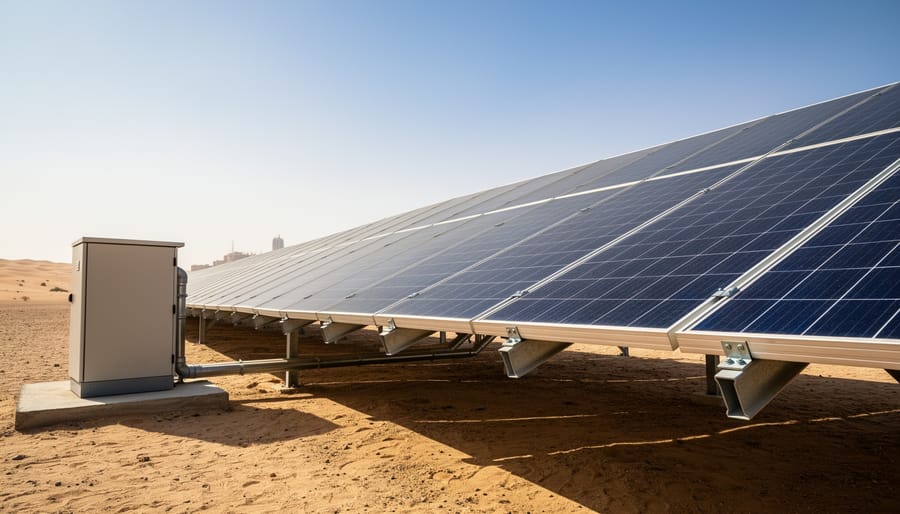
Greenhouse electricity, in the context of green power supply, means electricity generated with low or zero carbon emissions and sourced so that your consumption can be credibly matched to cleaner generation. The best supply approach depends on how much of your load you need to cover, how stable your demand is, and what your grid arrangement allows. Three models dominate: on-site solar, supply drawn from the national grid as it decarbonizes, and larger hybrid projects that pair solar, wind, and storage.
Oman offers a useful lens on all three. Nama Power and Water Procurement (Nama PWP), the state-owned sole electricity offtaker, has signed a power purchase agreement for roughly 2.7 GW of renewable capacity and storage with O-Green, the clean energy platform run by Naqaa Sustainable Energy. The project combines solar PV, wind, and battery storage to deliver steadier green power to the national grid. Yet renewables supplied only about 9% of Oman’s energy consumption in 2025, against targets of 20% by 2030 and 35% to 39% by 2040.
For industrial buyers, that gap is both a challenge and an opening. This guide compares the supply models, sets out the factors that matter most, offers recommendations by use case, and flags the mistakes that raise costs or weaken sustainability claims. Pricing, incentives, and regulatory requirements still need confirming with Nama PWP and your supplier before you commit.
What Greenhouse Electricity Means for Industrial Buyers
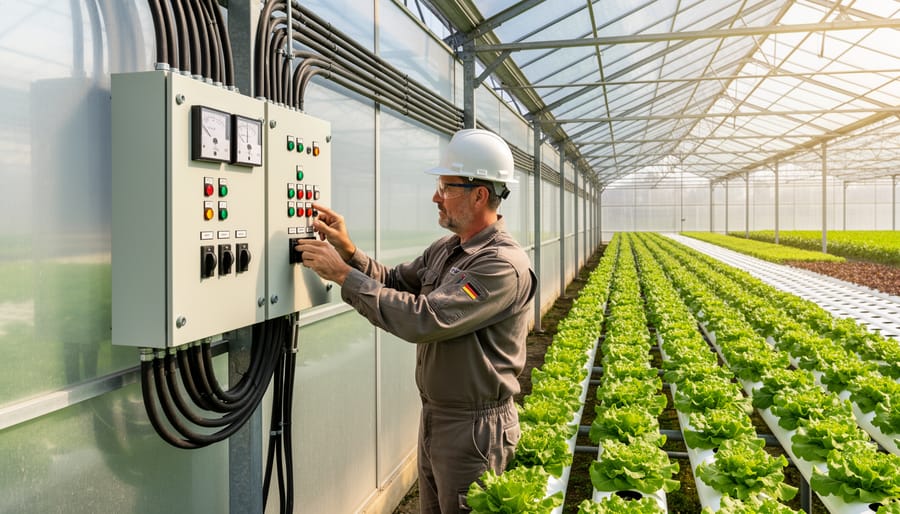
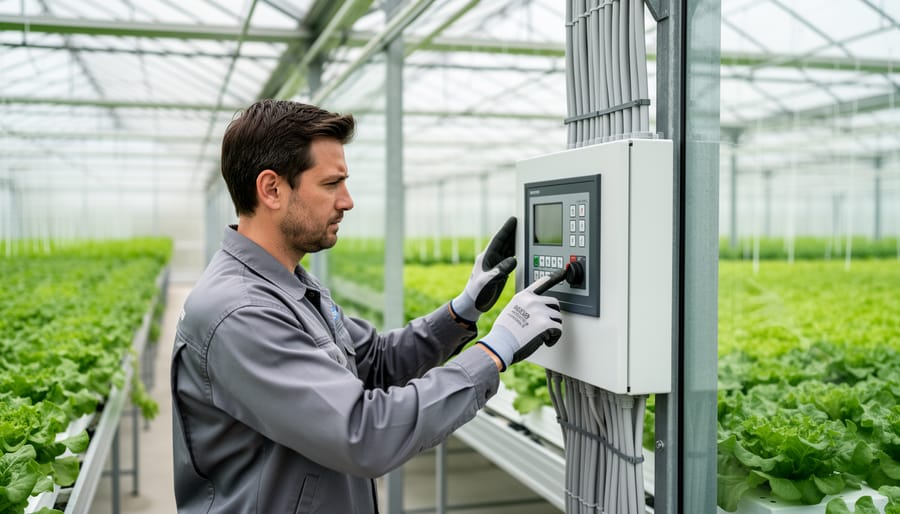
“Greenhouse electricity” is the phrase buyers often use for power generated from renewable sources such as solar and wind. In practice, it covers the electricity that keeps energy-intensive operations running, including controlled-environment agriculture and heavy industry, with a smaller reliance on conventional generation.
A green electricity production service works in a straightforward way. A provider develops, supplies or manages renewable generation, and your facility draws on that supply to cut its dependence on conventional power. Three terms come up repeatedly:
– Power purchase agreement (PPA): a long-term contract under which a buyer agrees to purchase electricity from a generator on set terms. In Oman, Nama PWP, the state-owned sole offtaker, has signed a PPA covering about 2.7 GW of renewable and storage capacity.
– Battery energy storage system (BESS): batteries that store surplus power and release it when generation dips, which steadies supply.
– Grid connection: the link that carries generated power into the national network, from which facilities draw their electricity.
Why does this matter to operators? Power cost and reliability sit near the top of every industrial priority list. A facility running wastewater treatment depends on pumps, aeration and filtration that draw power around the clock. The same applies to water recycling systems, where continuous operation is what delivers the efficiency gains. Understanding the supply model behind your electricity is the first step toward managing cost-effectiveness across both water and energy.
Oman’s Green Electricity Landscape: Key Details Buyers Should Know
Oman’s electricity market is structured around a single buyer. Nama Power and Water Procurement (Nama PWP) is the state-owned sole procurer of projects, which means large renewable capacity reaches the market through this one offtaker rather than through many competing buyers.
The most significant recent step is the 2.7 GW O-Green PPA. Nama PWP signed a power purchase agreement covering approximately 2.7 GW of renewable energy and storage capacity with O-Green, the integrated clean energy platform run by Naqaa Sustainable Energy. Through that platform, Naqaa manages a renewable portfolio exceeding 11 GW of solar and wind capacity in Oman. The hybrid project combines solar PV, wind power and battery energy storage systems (BESS) to deliver stable green electricity to the national grid.
For context, renewables supplied approximately 9% of Oman’s total energy consumption in 2025. The country’s renewables target 20% by 2030, rising to between 35% and 39% by 2040. The table below summarizes the verified project and policy figures.
| Project or target | Capacity | Technology | Timeframe |
|---|---|---|---|
| O-Green hybrid project (Nama PWP PPA) | Approx. 2.7 GW | Solar PV, wind, BESS | Contracted |
| Al Kamil Solar IPP | 400 MW | Solar | 2027 |
| Mahout Wind IPP | 800 MW | Wind | 2028 |
| Solar IPP | 1 GW | Solar | 2029 |
| Renewables share of energy consumption | 20% target | Mixed renewables | 2030 (35% to 39% by 2040) |
What does this mean for buyers? First, the commissioning window from 2027 to 2029 gives procurement teams a realistic planning horizon for when additional renewable supply is expected to come online. Second, the pairing of solar, wind and storage points to a supply designed for steadier delivery, which matters for continuous industrial processes. Third, the gap between today’s roughly 9% share and the 2030 and 2040 targets signals continued expansion of capacity.
These facts describe the market, not the terms any individual buyer will receive. Pricing, incentives and regulatory requirements are not covered here and should be confirmed directly with providers and the relevant authorities.
Key Buying Factors When Evaluating Green Electricity Production Services
Capacity, Reliability and Technology Mix
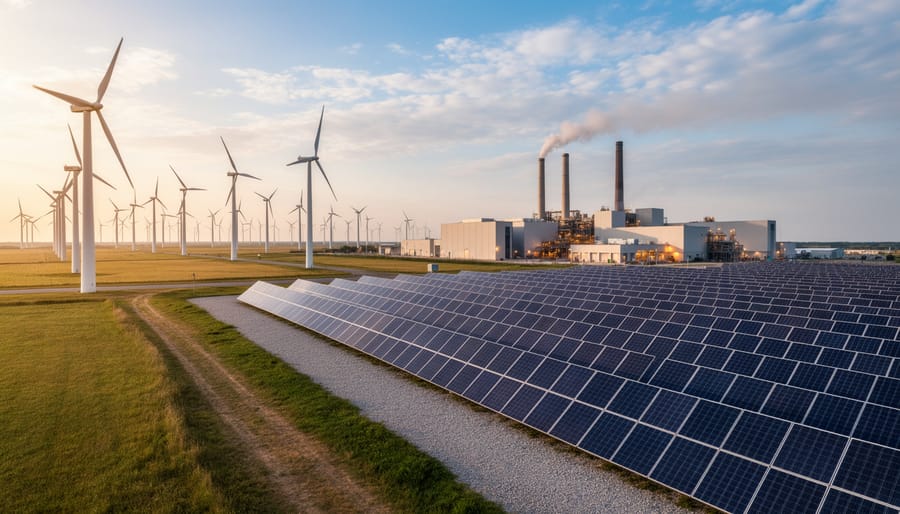
Matching supply to demand starts with your load profile. A facility that runs around the clock needs generation and storage sized to its steady baseline, not just its daytime peak. Solar output rises and falls with daylight, while wind often fills different hours, and battery energy storage (BESS) holds surplus energy for the gaps. That is why the hybrid approach in Oman pairs solar PV, wind and storage to deliver stable green electricity to the national grid. When you assess renewable resources for a continuous process, check these points:
- Baseline and peak demand: sizing generation to the wrong figure leaves either shortfalls or stranded capacity.
- Technology mix: solar and wind complement each other across the day and the seasons.
- Storage capacity: BESS smooths variability and supports uninterrupted operation.
- Tolerance for interruption: critical processes may need stricter reliability commitments from the provider.
Confirm each of these with your provider before committing to a configuration.
Commercial Terms, Timing and Regulatory Pathway
Commercial terms deserve as much scrutiny as the technology. Ask the provider how the contract is structured, what term it runs, and which party carries delivery and performance risk. For context, Nama PWP is Oman’s sole state-owned electricity offtaker, and its power purchase agreement of approximately 2.7 GW covers renewable and storage capacity sold into the national grid. Large-scale supply therefore flows through that offtake framework, so confirm early how your facility would connect to it.
Timing matters too. Several projects are planned for commissioning between 2027 and 2029, including the 400 MW Al Kamil Solar IPP in 2027. Align your decision with those windows rather than assuming immediate availability.
Public coordination efforts, such as the renewable MoUs shaping project delivery, can also inform your planning.
Finally, verify pricing, cost drivers, incentives and regulatory requirements directly with the provider and the relevant authorities. These details should be confirmed in writing, not assumed.
Supply Models Compared: Grid-Connected Hybrid, On-Site Solar and Offtake Agreements
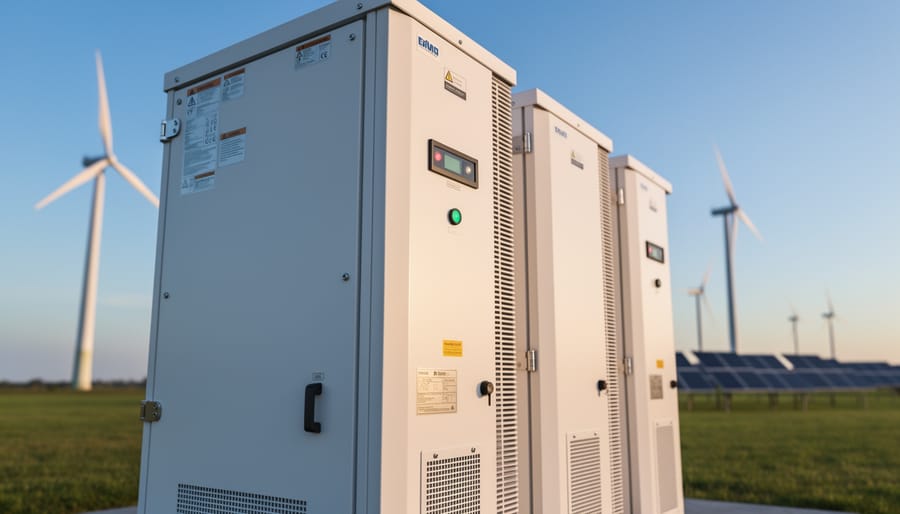
Industrial buyers in Oman have three realistic routes to green electricity, and each trades scale, control and speed differently. The comparison below sticks to what is verified and flags what you still need to confirm with providers and authorities.
| Supply model | Scale and technology mix | Grid connection and timing | Points to confirm |
|---|---|---|---|
| Grid-supplied renewable power from hybrid projects | Utility scale; the 2.7 GW O-Green agreement combines solar PV, wind and BESS | Delivered to the national grid through Nama PWP, the sole offtaker; projects are planned for commissioning between 2027 and 2029 | How supply reaches your site and the commercial arrangement |
| On-site or near-site solar PV with storage | Sized to your own load; solar PV plus battery storage | Connection design is specific to your facility; timing depends on your own project schedule | Permitting route and interconnection requirements |
| Direct supply or PPA-style arrangement with a renewable platform | Drawn from a platform portfolio, such as O-Green’s 11 GW of solar and wind capacity | Depends on the agreement structure and the grid model that applies | Whether direct supply is permitted for your facility and on what terms |
Grid-supplied hybrid power offers the greatest capacity. Because solar PV, wind and storage work together, supply is steadier than any single technology could deliver. The trade-off is that you do not control the generation, and your timing follows the project schedule. The 400 MW Al Kamil Solar IPP is due in 2027, the 800 MW Mahout Wind IPP in 2028 and the 1 GW Solar IPP in 2029, so buyers needing power sooner should plan around that window.
On-site generation gives you the most control and the shortest decision chain, since you set the size, the storage and the timeline. It is also limited by available land or roof area and by the load you can realistically cover. If you go this route, it pays to optimize solar systems against your actual demand profile before committing to capacity.
Platform-based supply sits between the two. It can give access to a large, diversified portfolio without building your own assets, but the commercial and regulatory pathway is the least settled from a buyer’s perspective. Pricing, incentives and regulatory requirements are not covered by the verified facts here, so treat them as open questions to raise early with the provider and the relevant authorities.
Recommendations: Matching a Supply Approach to Your Facility
For a large continuous-process plant, reliability comes first. These sites cannot tolerate supply gaps, so favour an approach that pairs generation with battery energy storage (BESS) and confirms the grid connection model early. Oman’s large hybrid projects combine solar PV, wind and BESS specifically to deliver stable power, which is the profile a round-the-clock operation needs.
A mid-sized facility with wastewater treatment and water recycling should size its approach around the load those systems actually draw. If demand is moderate and steady, on-site or near-site solar paired with storage may fit, with grid-supplied renewable power covering the balance. Planning water and energy together matters here, because pumping, aeration and reuse loads shape the electricity profile and the savings available from efficiency work.
For a multinational site with sustainability targets, the priority is a supply route you can document and defend. Direct supply or PPA-style arrangements with a renewable platform may suit this profile, provided the commercial and regulatory terms are verified with the provider and relevant authorities first.
Whatever your profile, a phased approach tends to work best. The 400 MW Al Kamil Solar IPP (2027), the 800 MW Mahout Wind IPP (2028) and the 1 GW Solar IPP (2029) are all planned for commissioning, so you can start with efficiency measures and a near-term arrangement, then step up as new capacity comes online. Treat any figures on cost or incentives as open questions to settle directly, not assumptions to build a business case on.
Common Mistakes to Avoid When Buying Green Electricity
Six mistakes account for most poor outcomes, and each has a simple fix.
Choosing on headline capacity alone. A large gigawatt figure says little about how well supply matches your demand. Compare capacity against your actual load profile before shortlisting any provider.
Overlooking storage and reliability. Solar and wind output varies, so continuous processes depend on battery energy storage to smooth supply. Ask how storage is integrated into the hybrid design rather than treating it as an optional extra.
Ignoring commissioning timelines. Oman’s planned projects are scheduled between 2027 and 2029, so capacity you want today may not exist yet. Build a phased plan around realistic start dates.
Assuming terms without confirmation. Pricing, incentives and regulatory requirements are details that vary and should never be taken for granted.
Skipping the regulatory pathway check. Establish early which route to supply applies to your facility, and who must approve it, so permitting does not stall the project later.
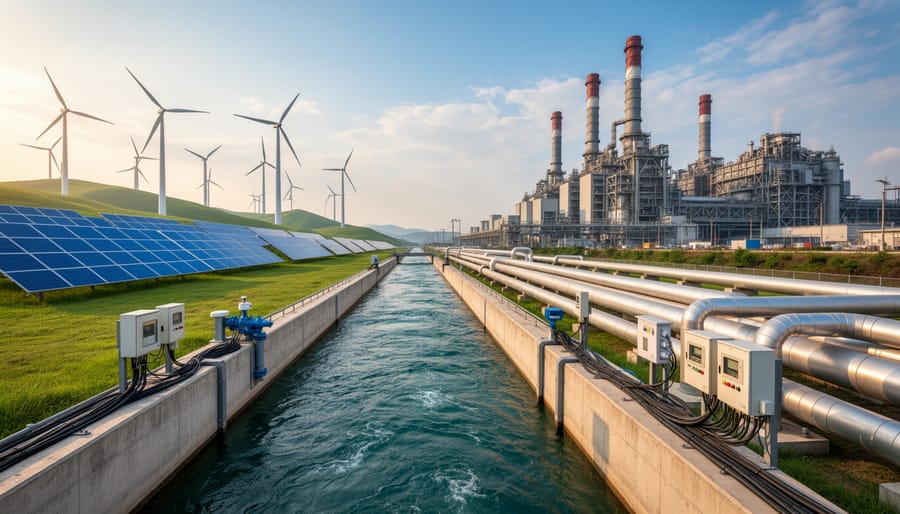
Treating electricity and water planning separately. Facilities with wastewater treatment and water recycling carry significant energy loads. Planning both together exposes efficiencies and cost savings that separate procurement misses.
Frequently Asked Questions About Greenhouse Electricity
What is greenhouse electricity?
In this guide, greenhouse electricity means power generated from renewable sources such as solar, wind and hybrid systems with storage. It also covers power supplied to controlled-environment agriculture and other energy-intensive facilities.
How much of Oman’s energy comes from renewables?
Renewable energy accounted for approximately 9% of total energy consumption in Oman in 2025. The national targets are 20% by 2030 and between 35% and 39% by 2040.
Who buys power from large renewable projects in Oman?
Nama Power and Water Procurement (Nama PWP) is the state-owned sole electricity offtaker. It has signed a power purchase agreement covering approximately 2.7 GW of renewable energy and storage capacity with the O-Green platform.
What role does battery storage play?
Battery energy storage systems (BESS) are integrated with solar PV and wind in the hybrid project to deliver stable green electricity to the national grid. For continuous industrial processes, that steadier supply is the main reason storage matters.
When will new renewable projects come online?
Oman plans to commission several projects between 2027 and 2029. These include the 400 MW Al Kamil Solar IPP in 2027, the 800 MW Mahout Wind IPP in 2028 and a 1 GW Solar IPP in 2029.
Questions about pricing, incentives and regulatory requirements are deliberately left out here, because those details vary and should be confirmed directly with providers and the relevant authorities before you commit to a supply approach.
Green electricity production services are moving from pilot-scale ambition to delivery. With a hybrid portfolio of solar, wind and storage already contracted and a commissioning window running from 2027 to 2029, industrial buyers have a credible path to cleaner, steadier power.
The selection logic stays simple. Start with fit: does the capacity and technology mix match your load profile? Then test reliability, particularly the role of storage for continuous processes. Check timing against your own growth plans, and confirm pricing, incentives and regulatory requirements directly with the provider and the relevant authorities rather than assuming them.
Buyers who plan energy and water together tend to find the most practical savings, because efficient power supports efficient treatment and recycling. Done well, that integration lowers operating costs, strengthens resilience and helps facilities meet sustainability targets while they grow.