The five primary renewable resources transforming industrial energy partnerships in 2026 are solar, wind, hydropower, biomass, and geothermal energy. Each offers distinct advantages for Memoranda of Understanding (MOUs) between energy providers and industrial partners, with selection depending on geographic location, energy demand profiles, and infrastructure requirements.
As global industries accelerate their transition away from fossil fuels, understanding these five resources has become essential for procurement specialists and sustainability managers negotiating energy agreements. The choice between them directly impacts project viability, return on investment timelines, and long-term operational costs. Solar photovoltaic systems now deliver electricity at costs competitive with conventional sources in most markets, while offshore wind projects are scaling to meet baseload industrial demands. Hydropower remains the most established option for continuous power supply, particularly in regions with suitable water resources.
Biomass and geothermal represent specialized opportunities. Biomass conversion suits industries with organic waste streams or access to agricultural residues, creating circular economy benefits within MOU structures. Geothermal provides stable, weather-independent power but requires specific geological conditions that limit deployment geography.
For decision-makers evaluating renewable energy MOUs, the framework matters as much as the resource itself. Successful agreements address power purchase terms, capacity guarantees, maintenance responsibilities, and performance metrics. Industrial partners increasingly seek hybrid solutions combining multiple renewable sources to ensure reliability and cost optimization. This strategic approach reduces weather-related variability while maximizing the efficiency gains each resource type offers.
The following analysis examines each renewable resource through the lens of industrial partnership viability, providing the technical context and economic considerations necessary for informed MOU negotiations.
Solar Energy: The Foundation of Industrial Power Agreements
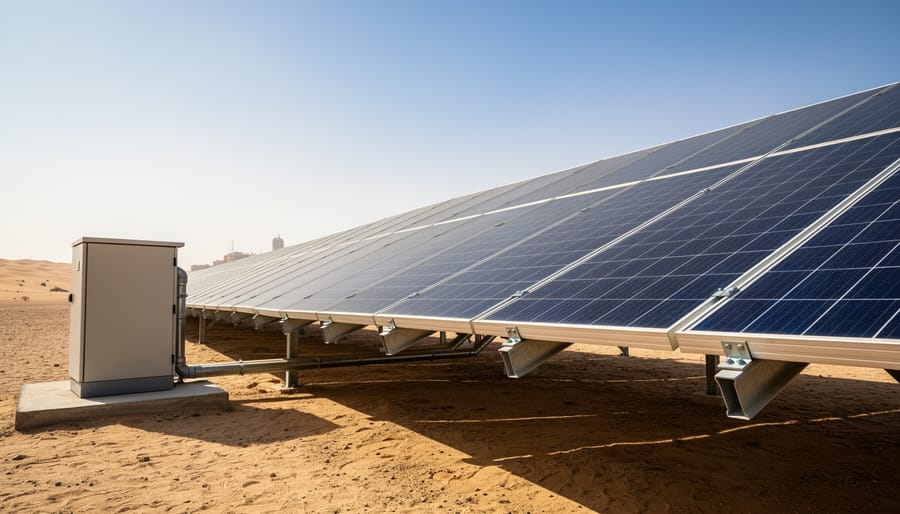
Solar energy stands as the most widely adopted renewable resource in industrial partnership agreements, offering unmatched scalability and accessibility for facilities seeking to reduce grid dependence. Photovoltaic (PV) systems dominate industrial MOUs because they deliver predictable returns, modular installation options, and relatively low maintenance requirements compared to other renewable technologies. A manufacturing plant can begin with a modest rooftop array and expand capacity incrementally as partnership agreements mature, making solar an ideal entry point for organizations new to renewable energy collaboration.
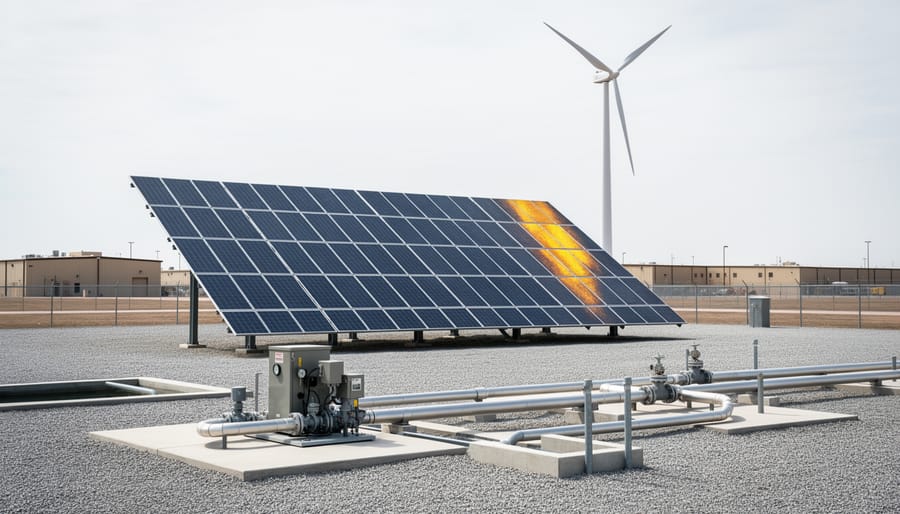
Concentrated Solar Power (CSP) systems present a compelling alternative for energy-intensive operations requiring thermal energy alongside electricity generation. Unlike standard PV panels, CSP installations use mirrors or lenses to focus sunlight onto receivers that generate heat for industrial processes or electricity production. Several desalination and wastewater treatment facilities have structured MOUs around CSP technology because it addresses dual needs: powering treatment equipment and providing heat for thermal processes like sludge drying or distillation. The technology proves particularly cost-effective in regions with high direct normal irradiance, where industrial partners can negotiate long-term heat and power supply agreements.
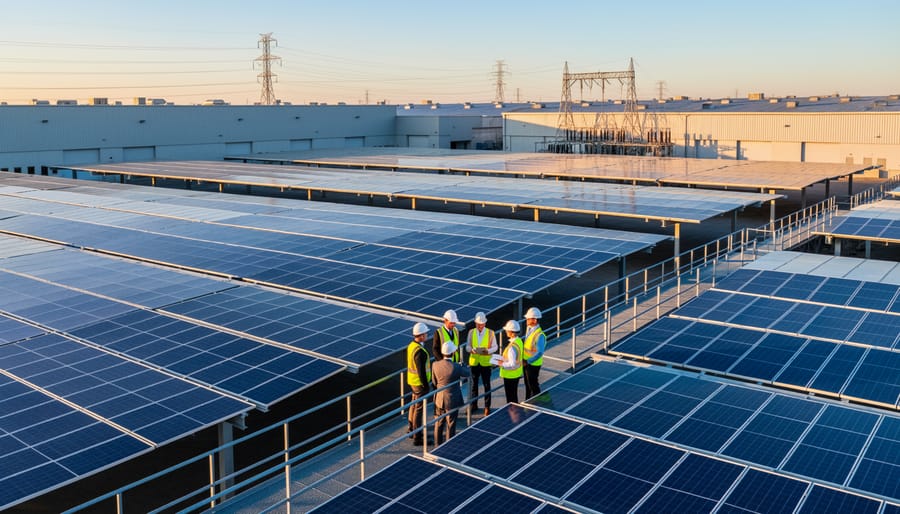
Industrial facilities integrate solar infrastructure through partnership models that reduce upfront capital barriers while securing energy price stability. Power Purchase Agreements (PPAs) structured within renewable energy MOUs allow a third-party developer to finance, install, and maintain solar arrays on industrial property, with the facility purchasing electricity at predetermined rates. This arrangement transfers technical and financial risk to the energy partner while guaranteeing the industrial operator predictable energy costs for 15 to 25 years. Manufacturing operations in Southeast Asia have leveraged this model extensively, with textile and electronics factories entering solar MOUs that cut electricity expenses by 20 to 30 percent compared to conventional grid rates.
Wastewater treatment plants demonstrate solar energy’s practical application in resource-intensive industrial settings. A municipal treatment facility in California partnered with a renewable energy developer through an MOU that installed 2.5 megawatts of floating solar panels on clarifier ponds, generating approximately 40 percent of the plant’s annual electricity needs. The floating configuration eliminated land use conflicts and reduced water evaporation by 30 percent, creating multiple efficiency gains. Similar agreements have emerged across water treatment sectors globally, with operators recognizing that solar MOUs address both energy costs and sustainability reporting requirements that stakeholders increasingly demand.
Wind Power: Scaling Energy Independence Through Strategic Partnerships
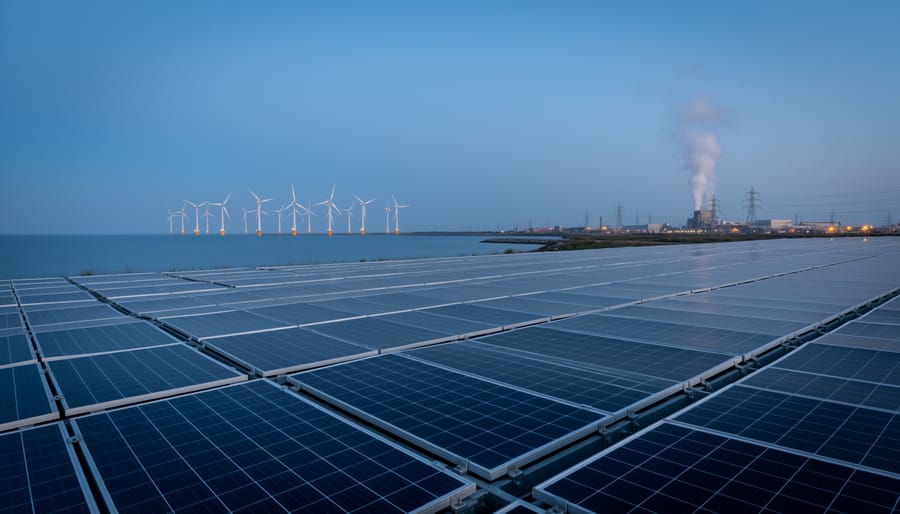
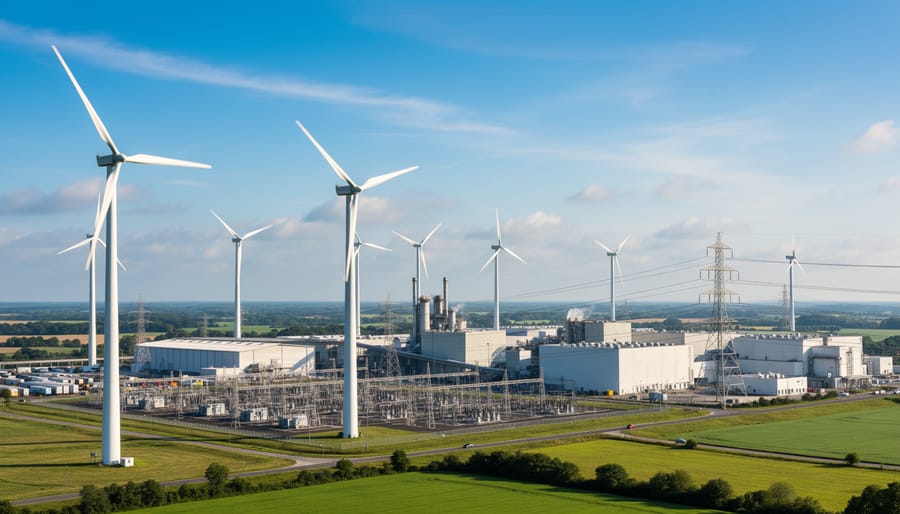
Wind energy stands as one of the five renewable resources best suited for industrial-scale operations requiring consistent, high-volume electricity supply. For water treatment facilities, manufacturing plants, and other energy-intensive operations, wind power offers predictable generation patterns that align with round-the-clock demand profiles. Unlike solar installations that face intermittency challenges, modern wind farms equipped with advanced turbine technology can maintain capacity factors exceeding 40%, delivering reliable baseload power that reduces dependence on fossil fuel sources.
MOUs structure these partnerships through three primary models: direct ownership agreements where industrial partners co-invest in dedicated wind farms, power purchase agreements (PPAs) that lock in fixed electricity rates for 15-25 years, and grid integration frameworks that allow companies to draw wind-generated power from regional networks. The financial architecture of wind energy MOUs typically addresses upfront capital requirements through shared investment structures, with industrial partners contributing land access, grid connection infrastructure, or guaranteed offtake commitments while energy developers handle turbine procurement and installation.
The cost-effectiveness equation for wind partnerships has shifted dramatically since 2020. Levelized costs for onshore wind now range between $0.02-0.05 per kilowatt-hour in favorable locations, making wind one of the five renewable resources with the strongest business case for industrial adoption. For wastewater treatment operators processing millions of gallons daily, a 10 MW wind allocation can offset 60-80% of annual electricity expenses while meeting sustainability mandates that increasingly influence procurement decisions and regulatory compliance.
Grid integration strategies within these MOUs address the technical complexities of matching variable wind generation with industrial load profiles. Battery storage provisions, curtailment protocols, and virtual power purchase agreements allow operations to smooth supply fluctuations while maintaining production schedules. Industrial facilities in Oman, Europe, and North America have successfully structured wind MOUs that couple renewable generation with existing grid connections, creating hybrid systems that optimize both cost stability and energy security without requiring complete infrastructure overhauls.
Biomass and Biogas: Converting Waste into Renewable Energy Assets
Biomass and biogas represent two interconnected renewable resources that transform industrial and organic waste streams into valuable energy assets, making them particularly attractive for wastewater treatment facilities and environmentally focused industries. Unlike solar or wind, which depend on weather patterns, these biological energy sources provide consistent baseload power while simultaneously addressing waste management challenges, a dual benefit that drives their inclusion in renewable energy MOUs.
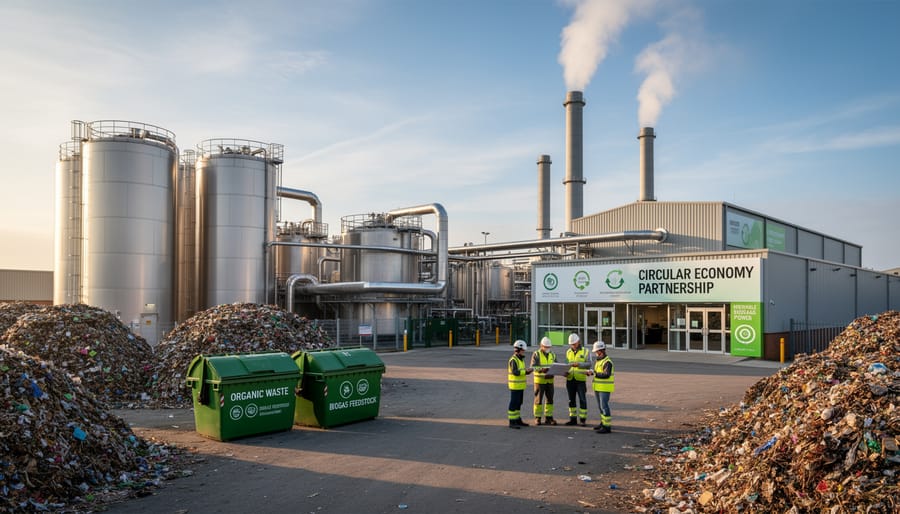
Biomass encompasses organic materials like agricultural residues, wood waste, food processing byproducts, and dedicated energy crops. When combusted or gasified, these materials generate heat and electricity for industrial processes. Biogas, produced through anaerobic digestion of organic matter, yields methane-rich gas suitable for power generation, heating, or vehicle fuel. Wastewater treatment plants generate substantial biogas from sewage sludge digestion, creating an on-site renewable resource that reduces grid dependence and operational costs.
MOUs structured around biomass and biogas projects typically address feedstock sourcing, technology deployment, and revenue sharing from energy production. For industries generating consistent organic waste, such as food processing facilities, agricultural operations, or municipal wastewater systems, these agreements establish frameworks for converting disposal costs into energy assets. A partnership might involve a wastewater treatment authority collaborating with an energy developer to upgrade existing digesters, capture methane that would otherwise be flared or vented, and convert it into electricity that powers treatment operations with surplus fed back to the grid.
The circular economy dimension strengthens the business case for these partnerships. Industrial facilities reduce waste disposal expenses while generating renewable energy credits and potential revenue from excess power sales. Environmental managers find these projects align sustainability reporting with tangible operational improvements. In regions like Oman where waste management and water treatment intersect with energy security priorities, biomass and biogas MOUs deliver measurable benefits across multiple organizational objectives.
Technical considerations in these agreements include digester capacity requirements, gas cleanup and compression systems, and grid interconnection specifications. Financial models account for feedstock availability guarantees, technology maintenance responsibilities, and performance benchmarks. Successful MOUs establish clear protocols for waste quality standards, energy output targets, and contingency plans if feedstock composition varies. For procurement specialists evaluating renewable options in 2026, biomass and biogas partnerships offer proven technology with straightforward payback periods, particularly when integrated into existing industrial operations that already manage organic waste streams.
Hydropower: Leveraging Water Resources for Dual Benefits
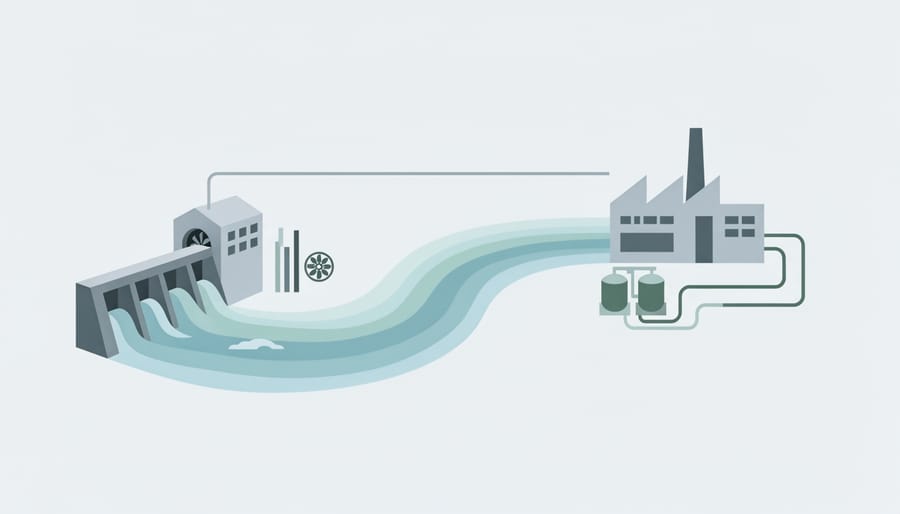
Hydropower stands apart among renewable resources for its unique capacity to deliver both energy generation and water management benefits simultaneously, a dual advantage particularly valuable for industrial wastewater treatment facilities and water recycling operations. Unlike intermittent sources, hydropower provides predictable, baseload electricity while operating within existing water infrastructure. For organizations managing substantial water flows, this renewable resource transforms necessary hydraulic operations into productive energy assets.
Industrial applications increasingly favor small-scale and micro-hydropower installations rather than conventional large dams. These compact systems capture energy from existing water treatment processes, cooling water discharge, or industrial wastewater flows without requiring massive infrastructure investments. A wastewater treatment plant processing 50 million liters daily, for example, can install micro-turbines in its outflow channels to generate 100-300 kilowatts continuously, enough to power the facility’s monitoring equipment and secondary treatment pumps. This approach eliminates transmission losses because generation occurs at the point of use.
| Hydropower Scale | Capacity Range | Typical Industrial Application | MOU Partnership Model |
|---|---|---|---|
| Micro-Hydropower | 5 kW – 100 kW | Process water outflows, cooling systems | Single-facility shared investment |
| Small-Scale Hydropower | 100 kW – 10 MW | Municipal water distribution, industrial canal networks | Multi-stakeholder regional agreements |
| Conventional Hydropower | 10 MW+ | Grid-scale water reservoirs | Long-term power purchase agreements |
Memoranda of Understanding for hydropower projects typically structure shared water-energy infrastructure where multiple parties benefit from coordinated development. A manufacturing complex and municipal water authority might sign an MOU to co-develop turbines within a shared water conveyance system, splitting construction costs while each organization retains rights to electricity generated during their peak usage hours. These agreements clearly delineate maintenance responsibilities, flow requirements, and revenue allocation formulas.
The efficiency metrics make hydropower compelling: conversion rates regularly exceed 90 percent, far surpassing solar or wind. A 500-kilowatt installation running at 80 percent capacity factor delivers 3,500 megawatt-hours annually with minimal operational intervention. For water-intensive industries, food processing, chemical manufacturing, pulp and paper, integrating hydropower into treatment and recycling loops creates measurable cost reductions while advancing sustainability commitments. The technology proves its worth through decades of reliable operation with comparatively low maintenance demands, making the business case straightforward for decision-makers evaluating renewable resource portfolios in 2026.
Geothermal Energy: The Reliable Baseload Renewable
Geothermal energy operates as a reliable baseload renewable resource, making it particularly valuable among the five renewable resources reshaping industrial energy partnerships. Unlike solar and wind, which fluctuate with weather conditions, geothermal systems deliver consistent heat or electricity 24 hours a day. This reliability stems from tapping into the Earth’s internal heat, temperatures below the surface remain constant regardless of season or time. For industries requiring uninterrupted energy supply, such as chemical processing or large-scale water treatment facilities, geothermal provides operational stability that other renewables struggle to match alone.
Direct-use applications offer the most immediate value for industrial operations. Facilities can circulate warm groundwater or steam through heat exchangers to maintain process temperatures, eliminating fossil fuel consumption for heating requirements. Manufacturing plants in regions with geothermal activity use this approach for metal processing, food dehydration, and equipment sterilization. Cooling applications work similarly, geothermal heat pumps extract or deposit heat underground, reducing energy demands for climate control in buildings and industrial spaces by up to 65 percent compared to conventional systems.
Power generation from geothermal resources requires higher subsurface temperatures but yields substantial electricity output. Binary cycle plants, the most common configuration for moderate-temperature reservoirs, convert geothermal heat into power without releasing emissions. Industrial MOUs for geothermal power generation typically involve longer development timelines than solar or wind projects due to exploration requirements.
Geography dictates feasibility more strictly than for other renewable resources covered here. Viable geothermal zones concentrate along tectonic plate boundaries and volcanic regions, though enhanced geothermal systems now expand potential sites. Partnership agreements specifically address exploration risks through phased investment structures, MOUs often allocate initial geological survey costs between parties before committing to full-scale development. Shared risk models make geothermal accessible to industrial partners without sole responsibility for discovery uncertainty. Multi-party agreements also pool technical expertise, combining energy developers’ drilling capabilities with industrial partners’ operational knowledge to optimize system integration and long-term performance.
Structuring Effective Renewable Energy MOUs: Key Considerations
Structuring an MOU for renewable energy begins with clear financial architecture. Cost-effectiveness in 2026 depends on selecting the right funding model, whether capital expenditure shared between partners, a build-own-operate-transfer arrangement, or power purchase agreements with third-party developers. Industrial decision-makers must quantify upfront costs against lifecycle savings, factoring in available incentives, carbon credits, and projected energy price volatility. Transparent cost allocation from day one prevents disputes as projects scale. For wastewater treatment facilities and manufacturing operations, embedding performance guarantees tied to energy output ensures accountability while protecting both parties from technical underperformance.
Risk allocation separates functional MOUs from problematic ones. Specify which party assumes responsibility for permitting delays, technology obsolescence, grid connection issues, and force majeure events. In renewable energy partnerships involving solar, wind, biomass, biogas, or geothermal resources, certain risks carry different weights depending on the technology. Geothermal exploration risk differs fundamentally from solar panel warranty concerns. Effective 2026 MOUs address these distinctions explicitly rather than relying on boilerplate language. Insurance requirements, liability caps, and exit provisions must reflect actual operational realities in your jurisdiction and sector.
- Power Purchase Agreement (PPA)
- A contractual arrangement where one party generates renewable electricity and another agrees to purchase it at predetermined rates over a specified period, often 15-25 years. PPAs can be structured within broader MOUs to define commercial terms.
- Offtake Agreement
- A commitment by an industrial partner to purchase a specified quantity of renewable energy or renewable-derived products, providing revenue certainty that enables project financing.
- Force Majeure
- Contract provisions defining extraordinary events (natural disasters, regulatory changes, pandemics) that excuse performance obligations without penalty. Clear force majeure clauses prevent disputes when unforeseen circumstances affect renewable energy projects.
- Technology Bankability
- The degree to which lenders and investors consider a renewable energy technology proven, reliable, and commercially viable for financing purposes. Bankable technologies reduce project risk and improve funding terms.
- Stakeholder Alignment Framework
- Structured governance approach ensuring all MOU parties, government entities, private developers, industrial users, community representatives, maintain shared objectives and decision-making protocols throughout project execution.
Technology selection criteria anchor successful partnerships. Match the renewable resource to your facility’s load profile, available land, and operational constraints. A 24/7 manufacturing plant benefits from baseload geothermal or biomass, while facilities with flexible operations can optimize around variable solar and wind. Procurement specialists should demand documented efficiency metrics, reference installations in similar climates, and realistic capacity factor projections. In 2026, proven technology trumps cutting-edge promises for industrial applications where energy reliability directly affects production.
Timeline alignment keeps all partners realistic. Define binding milestones for permitting, site preparation, equipment procurement, grid interconnection, and commissioning. Industrial MOUs spanning multiple years require phased investment triggers tied to verified progress, not calendar dates. Build contingency buffers for regulatory approvals and supply chain variables that remain unpredictable even in mature renewable markets.
Stakeholder alignment extends beyond signing parties. Engage regulators, utilities, local communities, and environmental authorities early. Their buy-in accelerates approvals and prevents mid-project roadblocks. Effective MOUs include stakeholder consultation protocols and benefit-sharing mechanisms that align community interests with industrial objectives, creating durable partnerships rather than transactional agreements.
These five renewable resources, solar, wind, biomass and biogas, hydropower, and geothermal energy, form a comprehensive portfolio that transforms industrial energy strategies through collaborative partnerships. Each resource brings distinct technical and economic advantages, while Memoranda of Understanding provide the structural framework to deploy them cost-effectively across manufacturing, water treatment, and environmental sectors.
The complementary nature of these resources creates opportunities for hybrid systems that maximize efficiency. Solar and wind address variable energy demands, biomass and biogas convert waste streams into assets, hydropower leverages existing water infrastructure, and geothermal provides reliable baseload capacity. When structured through strategic MOUs, organizations share technological expertise, financial risk, and operational knowledge that would be prohibitively expensive to develop independently.
For industrial decision-makers evaluating renewable energy partnerships in 2026, the priority is matching resource characteristics to specific operational requirements and geographical contexts. The most successful MOUs balance immediate cost savings with long-term sustainability objectives, establishing clear performance metrics and flexible terms that accommodate technological advances. These agreements have evolved from simple power purchase models to comprehensive collaborations that integrate energy generation with process optimization and waste valorization.
The trajectory for industrial renewable energy partnerships points toward increased integration, improved financing mechanisms, and broader stakeholder participation. Organizations that establish robust MOU frameworks now position themselves to adapt as technologies mature and regulatory landscapes shift, securing competitive advantages through energy independence and environmental leadership.