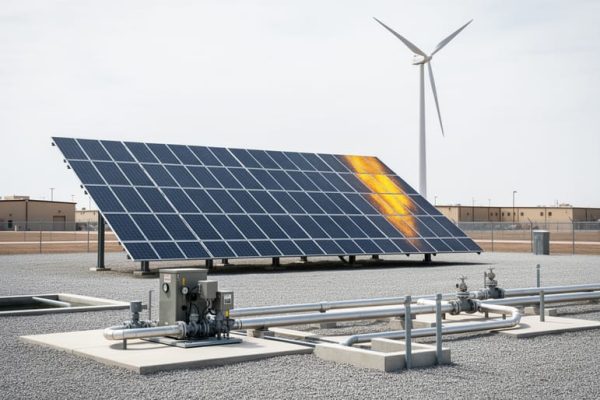
“Solar panels, a wind turbine, and nearby water treatment equipment at a military installation under an overcast sky.”

How DoD Memoranda of Understanding Are Accelerating Renewable Energy Projects

A DoD memorandum of understanding in the renewable energy sector establishes a formal framework through which the Department of Defense partners with public and private entities to advance clean energy infrastructure on military installations and surrounding communities. These agreements define the roles, responsibilities, and resource commitments of each party without creating legally binding obligations, allowing the DoD to accelerate renewable energy deployment while sharing technical expertise and risk with commercial partners.

Read More
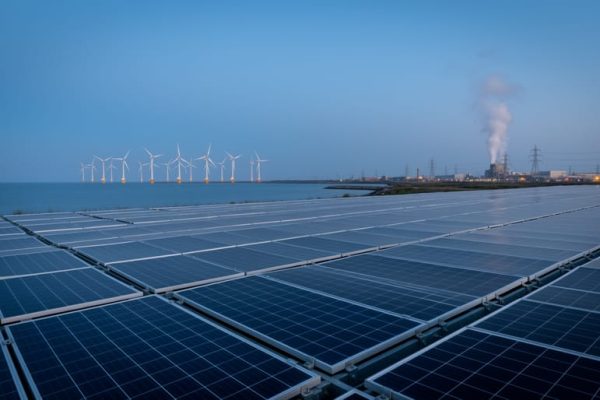
Wide view of a modern industrial facility with solar panels in the foreground, offshore wind turbines in the distance, and a faint geothermal steam plume rising behind.

5 Renewable Resources Driving Industrial Energy Partnerships in 2026

The five primary renewable resources transforming industrial energy partnerships in 2026 are solar, wind, hydropower, biomass, and geothermal energy. Each offers distinct advantages for Memoranda of Understanding (MOUs) between energy providers and industrial partners, with selection depending on geographic location, energy demand profiles, and infrastructure requirements.
As global industries accelerate their transition away from fossil fuels, understanding these five resources has become essential for procurement specialists and…

Read More
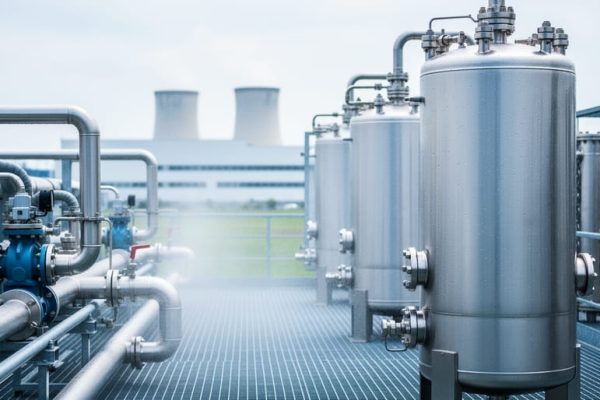
“Stainless-steel water recycling tanks and membrane modules in an industrial facility with clean pipes under bright overcast light.”

How Water Recycling Systems Turn Your Industrial Waste into Profit

Industrial and commercial facilities worldwide discharge over 300 billion cubic meters of water annually, yet the majority could reclaim 60 to 85 percent of that volume using proven recycling technologies. Water recycling systems transform wastewater into a strategic asset, reducing municipal supply dependency while cutting operational costs by 30 to 50 percent in sectors ranging from manufacturing to hospitality.
The business case has never been stronger. Water tariffs increased an average of 4.2 percent annually across developed markets in 2025, while discharge fees rose even faster. Companies implementing closed-loop water …

Read More
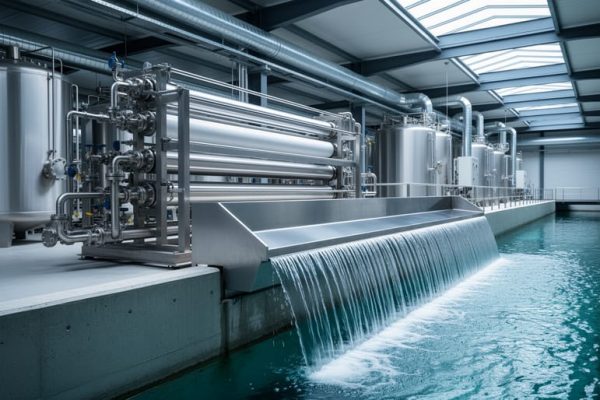
Stainless-steel membrane filtration system with clear water cascading over a polished weir into a channel, with blurred tanks and piping in the background under soft daylight.

Why Industrial Wastewater Treatment Isn’t Optional Anymore (And How to Do It Right)

Industrial wastewater treatment has become a regulatory requirement and business imperative across virtually every manufacturing sector. Facilities that process chemicals, manufacture pharmaceuticals, produce food and beverages, or finish metals generate effluent streams that can contain heavy metals, organic compounds, suspended solids, and other contaminants at concentrations far exceeding municipal limits. Without proper treatment, these discharges threaten receiving water bodies, violate environmental permits, and expose companies to penalties that can reach millions of dollars annually.
The engineering challenge lies in …

Read More