Industrial and commercial facilities worldwide discharge over 300 billion cubic meters of water annually, yet the majority could reclaim 60 to 85 percent of that volume using proven recycling technologies. Water recycling systems transform wastewater into a strategic asset, reducing municipal supply dependency while cutting operational costs by 30 to 50 percent in sectors ranging from manufacturing to hospitality.
The business case has never been stronger. Water tariffs increased an average of 4.2 percent annually across developed markets in 2025, while discharge fees rose even faster. Companies implementing closed-loop water systems now achieve payback periods between 18 and 36 months, depending on facility size and local utility rates. These systems don’t just reduce costs. They insulate operations from supply disruptions, meet increasingly stringent discharge regulations, and deliver measurable sustainability outcomes that resonate with investors and customers.
Modern recycling systems have evolved far beyond basic filtration. Today’s technologies combine membrane bioreactors, advanced oxidation, and smart monitoring to produce water quality matching or exceeding municipal standards. A pharmaceutical manufacturer in Singapore recycles 82 percent of process water. A data center in Arizona operates at near-zero freshwater consumption. These aren’t experimental projects. They represent mainstream industrial practice in 2026.
The decision to implement water recycling requires understanding which technologies suit your specific wastewater characteristics, what infrastructure investments you’ll need, and how system performance translates to financial returns. This guide provides the technical foundation and economic framework to evaluate whether water recycling makes sense for your facility, what implementation actually entails, and how to build a compelling business case for investment.
What Water Recycling Systems Actually Do in Industrial Settings
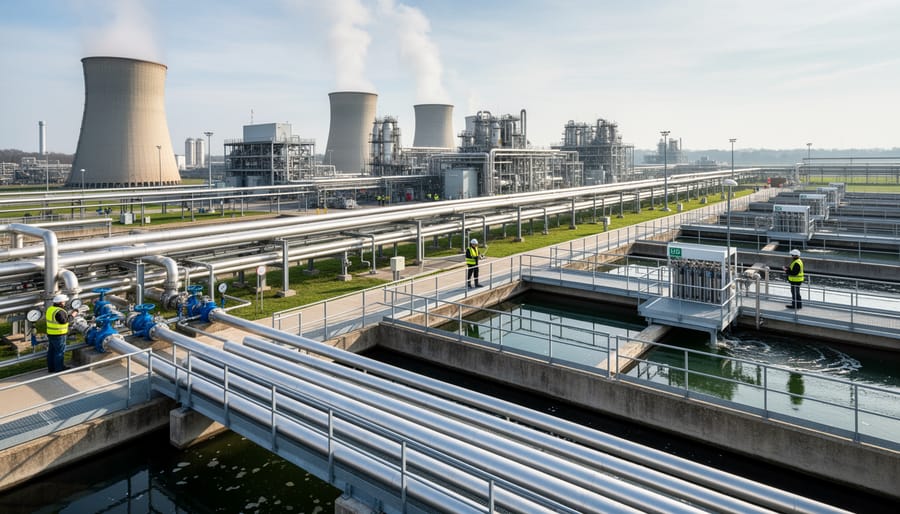
Water recycling systems capture wastewater from industrial processes, treat it to remove contaminants, and return it for reuse within the facility. Rather than discharging water after a single use, these systems create a closed-loop or semi-closed-loop cycle that significantly reduces both freshwater intake and wastewater discharge volumes.
The core function involves three stages: collection of process water or effluent, treatment through physical, chemical, or biological methods to meet quality specifications, and redistribution back into operations. The treatment intensity depends entirely on what you plan to use the recycled water for. Cooling tower makeup water requires less stringent treatment than boiler feedwater, while process water for food manufacturing demands near-potable standards.
Understanding the terminology matters when evaluating systems. Water reuse refers to taking treated wastewater and applying it to a different, typically less demanding purpose, using treated process water for landscape irrigation, for example. Water recycling means treating wastewater to the same quality specifications as the original application and returning it to that same process. Water reclamation involves treating wastewater to potable or near-potable standards, though this remains rare in industrial settings outside specific high-tech manufacturing applications.
In manufacturing plants, recycling systems commonly treat metal finishing rinse waters, parts washing effluent, and floor wash water for return to non-contact cooling or general utility use. Chemical manufacturers recycle process water by removing specific contaminants that would otherwise accumulate and compromise product quality. Textile operations reuse dye bath water after treatment to remove colour and dissolved solids.
Power generation facilities represent some of the largest water recycling applications. Cooling water cycles through repeatedly, with treatment targeting dissolved minerals and biological growth. Some plants now recycle ash handling water and flue gas desulfurization wastewater, reducing overall water consumption by 30-50%.
Food and beverage processors face stricter constraints given hygiene requirements, but many successfully recycle clean-in-place rinse water and cooling water after appropriate treatment. Pharmaceutical manufacturers employ sophisticated multi-stage systems to produce high-purity recycled water that meets strict process specifications.
The scale varies dramatically. A small metal finishing shop might recycle 5,000 gallons daily through a compact system occupying minimal floor space. A large petrochemical complex might process several million gallons daily through extensive treatment infrastructure.
The Financial Reality of Installing a Water Recycling System
Hidden Costs That Catch Companies Off Guard
Most companies budget for the capital equipment and installation, but the real financial surprises appear during the first 18 months of operation. Membrane replacement alone can consume 15-20% of annual operating costs, with intervals ranging from two to five years depending on feed water quality and pretreatment effectiveness. These aren’t optional expenses, delaying replacement leads to reduced recovery rates and higher energy consumption.
Staff training requirements often get underestimated. Your operators need specialized knowledge to troubleshoot membrane fouling, adjust chemical dosing, and interpret water quality data. Budget for initial training plus ongoing professional development. Facilities that skip this investment typically see more frequent system upsets and shorter equipment life.
Monitoring and control systems represent another hidden cost layer. Real-time sensors for conductivity, pH, turbidity, and pressure require annual calibration and periodic replacement. Laboratory testing for comprehensive water quality analysis adds recurring monthly expenses. Without proper monitoring, you’re operating blind and risking both product quality and discharge violations.
System upgrades become necessary as regulations tighten or production processes change. The tertiary treatment stage that wasn’t required in 2026 might be mandatory by 2028. Energy efficiency improvements, automation enhancements, and capacity expansions aren’t failures of initial design, they’re normal evolution of industrial water systems. Companies that view these as unexpected costs rather than planned operational evolution struggle with budget approvals and implementation delays.
Core Technologies Driving Modern Water Recycling
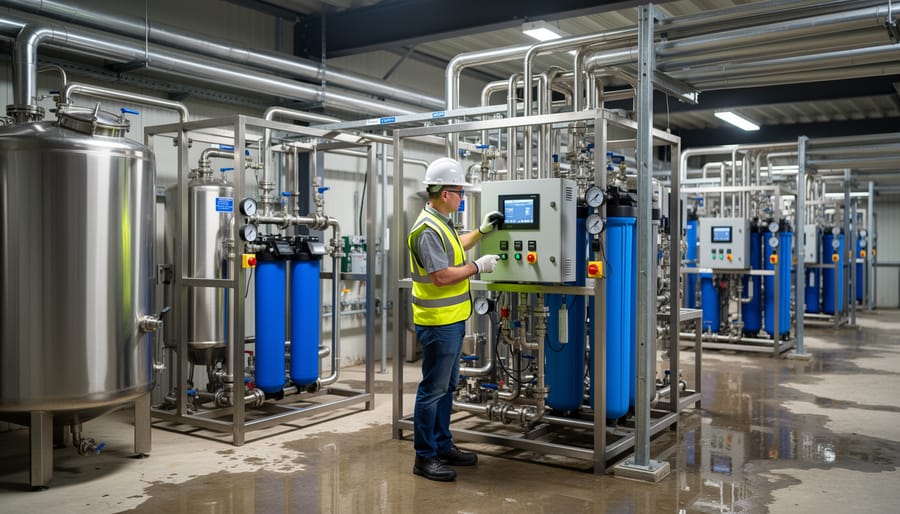
Membrane Filtration: The Workhorse of Water Recycling
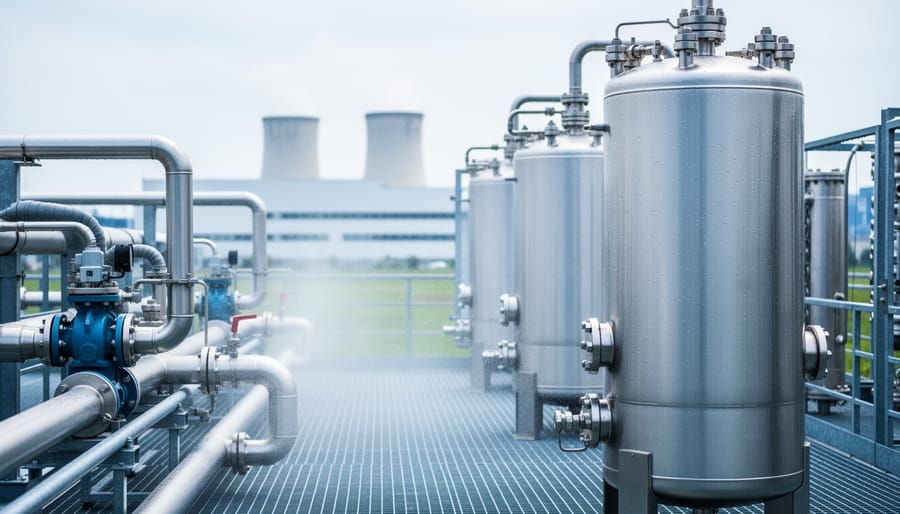
Membrane filtration handles the heavy lifting in most industrial water recycling operations. Three technologies dominate: reverse osmosis (RO), ultrafiltration (UF), and microfiltration (MF). Each uses semi-permeable membranes but operates at different pressures and pore sizes to target specific contaminants.
Reverse osmosis applies high pressure, typically 200 to 1,000 psi, to force water through membranes with pores measuring 0.0001 microns. This removes dissolved salts, heavy metals, and most organic compounds, making it essential for industries needing high-purity water or treating heavily contaminated streams. While point-of-use reverse osmosis systems serve residential applications, industrial RO installations process thousands of gallons daily. The trade-off: RO requires more energy and typically recovers 50 to 85% of feed water, with the rest discharged as concentrate.
Ultrafiltration operates at lower pressures (10 to 100 psi) with 0.01-micron pores, removing bacteria, viruses, and suspended solids. Manufacturing facilities use UF for pre-treatment before RO or as standalone treatment when dissolved solids aren’t the primary concern. Microfiltration’s larger 0.1-micron pores handle particles and some bacteria at minimal pressure, making it cost-effective for initial filtration stages.
Maintenance demands consistency. Fouling, when contaminants clog membrane surfaces, remains the primary challenge. Regular chemical cleaning, proper pre-treatment, and monitoring of differential pressure prevent costly membrane replacement. Most industrial membranes last three to seven years with disciplined maintenance protocols.
Biological and Chemical Treatment Options
Biological treatment harnesses naturally occurring microorganisms to break down organic contaminants in industrial wastewater. Activated sludge systems and moving bed bioreactors work well for food processing, pharmaceutical, and chemical manufacturing facilities where organic loads are high. These systems reduce biochemical oxygen demand (BOD) and chemical oxygen demand (COD) efficiently, though they require careful monitoring of microbial populations and typically need 12-48 hours retention time.
Chemical precipitation targets dissolved metals and phosphates by adding reagents that form solid particles for removal. Industries like metal finishing, mining, and electronics manufacturing use lime, ferric chloride, or aluminum sulfate to precipitate contaminants. This approach works quickly but generates sludge requiring disposal and adds ongoing chemical costs.
Advanced oxidation processes employ ozone, hydrogen peroxide, or UV light to destroy persistent organic compounds and disinfect water. These systems excel at removing pharmaceuticals, dyes, and complex organic molecules that resist biological treatment. While energy-intensive, they achieve high contaminant removal without producing secondary waste streams.
Most industrial water recycling systems combine these technologies, using biological treatment for bulk organic removal before chemical precipitation or advanced oxidation handles remaining specific contaminants.
Hybrid Systems That Maximize Recovery Rates
Combining treatment technologies lets facilities recover 85-95% of process water versus the 60-75% typical of single-technology systems. A hybrid approach pairs membrane filtration with biological or chemical pretreatment, removing both particulates and dissolved contaminants that would otherwise foul membranes or limit reuse quality.
Most industrial operations generate wastewater with mixed contaminant profiles, suspended solids, dissolved organics, heavy metals, and salts appear together. Sequential treatment stages target each category: biological reactors handle organics first, chemical precipitation removes metals, then membrane filtration polishes water to required specifications. This staged removal prevents membrane fouling while achieving stringent reuse standards.
The investment premium for hybrid systems, typically 20-30% above single-technology installations, pays back through higher water recovery and reduced membrane replacement costs. Facilities handling variable feed water particularly benefit, as multiple treatment barriers maintain consistent output quality despite input fluctuations.
Matching System Design to Your Industry’s Specific Needs
Industrial facilities can’t simply copy a neighbour’s recycling system and expect results. Each sector deals with distinct contaminants, operates under different regulations, and reuses water for specific purposes that demand tailored solutions.
Manufacturing plants face widely varying water chemistry depending on what they produce. Metal finishing operations contend with heavy metals, oils, and acid-alkaline swings that require chemical precipitation before membrane treatment. Pharmaceutical manufacturers need systems that meet stringent purity standards for process water while handling organic solvents. Textile factories must remove dyes and suspended solids, often requiring biological treatment combined with advanced oxidation. The key is matching treatment intensity to your actual discharge composition, not over-engineering for contaminants you don’t produce.
Food and beverage processors operate under the tightest microbiological controls. Your recycled water might contact ingredients or packaging, which means treatment trains must include multiple disinfection barriers. Ultrafiltration removes pathogens, but you’ll likely need UV sterilisation or chlorination as secondary protection. Recovery rates matter less here than absolute quality assurance, and systems must accommodate Clean-In-Place cycles that introduce caustic chemicals and organic loads in concentrated bursts. Budget for holding tanks that balance these surges.
| Industry Sector | Primary Contaminants | Core Technologies | Typical Reuse Target |
|---|---|---|---|
| Manufacturing (Metal/Electronics) | Heavy metals, oils, suspended solids, pH variability | Chemical precipitation + microfiltration + ion exchange | Process rinse water, cooling towers |
| Petrochemical/Refining | Hydrocarbons, dissolved organics, high salinity | API separators + biological treatment + RO | Boiler feedwater, cooling systems |
| Food & Beverage | Organic matter, bacteria, fats, cleaning chemicals | Biological treatment + UF + UV disinfection | Equipment washing, limited process use |
| Power Generation | Dissolved minerals, scale-forming compounds | Softening + RO + electrodeionisation | Cooling tower makeup, boiler feedwater |
Petrochemical and refining facilities deal with oily wastewater and dissolved hydrocarbons that foul membranes quickly without proper pre-treatment. Dissolved air flotation and biological reactors remove the bulk organics, but you’ll need activated carbon polishing before reverse osmosis. These operations also generate high-salinity streams from desalter units, which limits recovery rates unless you invest in brine concentrators. The payoff comes from recycling into cooling towers and steam systems, which consume massive volumes.
Power generation plants need ultra-pure water for boilers, making demineralisation the priority rather than pathogen removal. Your system design hinges on whether you’re supplementing existing ion exchange systems or replacing them entirely with membrane technology. Silica and hardness removal determine membrane selection, and you’ll want continuous monitoring since even small quality deviations damage turbines. Recovery rates above eighty percent are achievable here because the influent is relatively clean condensate and cooling blowdown.
The worst approach is selecting standard packaged systems marketed as “universal solutions.” Effective recycling infrastructure starts with detailed water audits that map your specific flows, contaminant profiles, and reuse opportunities, then builds treatment sequences that address your actual needs rather than theoretical capabilities.
Regulatory Compliance and Water Quality Standards in 2026
Industrial water recycling systems in 2026 must navigate a patchwork of international standards, national regulations, and industry-specific guidelines that vary significantly by region and application. The ISO 20468 series provides globally recognized water reuse guidelines, while organizations like the Gulf Cooperation Council have established specific standards for water-stressed regions. Understanding which frameworks apply to your operation determines both system design requirements and ongoing compliance obligations.
Discharge standards represent the most immediate regulatory concern. Facilities releasing treated water back into municipal systems or natural water bodies must meet concentration limits for parameters including biochemical oxygen demand, total suspended solids, heavy metals, and pH levels. These thresholds differ based on receiving environment sensitivity and local enforcement priorities. Many jurisdictions now require continuous monitoring with automated reporting systems that transmit data directly to environmental authorities.
Reuse application standards add another layer of complexity. Water recycled for cooling tower makeup faces different quality requirements than process water or equipment cleaning applications. Industrial boiler feedwater demands particularly stringent treatment to prevent scaling and corrosion, with specific conductivity, silica, and dissolved solids limits that exceed typical discharge standards. Some facilities maintain multiple recycled water streams at different quality tiers to optimize treatment costs against end-use requirements.
Documentation requirements have intensified considerably. Operators must maintain detailed records of water quality testing results, system maintenance activities, treatment chemical usage, and any deviation from normal operating parameters. Annual compliance reports typically include volumetric water balances demonstrating recovery rates and confirming that recycled water volumes stay within permitted limits.
The compliance burden creates opportunities for facilities that implement robust systems early. Many regions now offer expedited permitting, reduced discharge fees, or priority water allocation during shortage periods for certified water recycling operations. Some jurisdictions count recycled water toward corporate sustainability reporting requirements or environmental impact assessment credits, providing tangible regulatory advantages beyond direct cost savings.
Implementation Strategy: From Planning to Operation
Installing a water recycling system is not a one-time purchase decision. It’s a staged process that demands careful coordination across engineering, operations, and finance teams. Companies that rush installation without proper groundwork typically face cost overruns, performance shortfalls, and extended downtime.
The implementation sequence follows a logical progression:
- Conduct a comprehensive water audit documenting current consumption, discharge volumes, and quality parameters across all process streams. This baseline data reveals which water sources are recyclable and quantifies potential savings.
- Commission a feasibility study analyzing your facility’s specific contaminant profile, required treatment levels, and space constraints. This determines which technologies suit your needs and establishes realistic recovery targets.
- Develop detailed system specifications including treatment capacity, target water quality for each reuse application, and integration points with existing infrastructure. Lock these specifications before requesting vendor proposals.
- Select equipment suppliers and installation contractors based on demonstrated industrial experience, not just price. Request references from facilities with similar water chemistry challenges.
- Create a staged installation plan that minimizes production disruptions. Most industrial installations happen during planned maintenance windows, with critical components pre-assembled off-site.
- Execute installation with dedicated project management tracking progress against milestones. Ensure all piping, controls, and monitoring systems integrate properly with your existing operations.
- Run commissioning trials using actual process water, not clean feed. Test the system under varying load conditions and deliberately stress it to identify weak points before full operation.
- Train operations staff on routine monitoring, basic troubleshooting, and emergency shutdown procedures. Maintenance teams need separate training on membrane cleaning protocols and replacement schedules.
- Implement a 90-day optimization period adjusting chemical dosing, flow rates, and recovery percentages based on real performance data. Most systems require fine-tuning before reaching design efficiency.
The critical phase is between commissioning and full operation. Many facilities declare success too early, then struggle when seasonal variations or production changes stress the system. Build in buffer capacity and monitor performance metrics weekly during the first six months.
Documentation matters throughout. Every modification, chemical adjustment, and performance deviation should be logged. This data becomes invaluable when troubleshooting issues or planning capacity expansions. Regulatory inspections also require comprehensive operational records demonstrating consistent water quality compliance.
Real-World Performance: What to Expect After Installation
Once your water recycling system is operational, you can typically expect water recovery rates between 70% and 95%, depending on your system design and water quality requirements. Most industrial facilities achieve 80-85% recovery in the first year of operation, with optimization pushing that figure higher as operators refine processes and gain experience with their specific setup.
Quality consistency remains one of the strongest performance metrics for properly designed systems. Modern membrane-based systems reliably produce output water that meets specified quality parameters day after day, with total dissolved solids removal exceeding 98% in reverse osmosis applications. Manufacturing facilities report conductivity variations of less than 5% across production cycles, eliminating the uncertainty that comes with municipal water supplies that fluctuate seasonally.
A food processing plant in the Middle East documented a 62% reduction in freshwater purchases within eight months of commissioning their recycling system, recovering approximately 180,000 liters daily from process streams that previously went to drain. Their system maintained consistent output quality while handling significant variations in incoming wastewater composition throughout seasonal production peaks.
Chemical manufacturers typically see different results. A specialty chemicals facility achieved 88% water recovery but required quarterly membrane cleaning to maintain performance, a planned maintenance activity that became routine rather than disruptive once integrated into their operational schedule. Their actual operating costs came in 12% below projections due to lower chemical consumption than modeled.
System uptime averages 92-96% for well-maintained installations, with most downtime occurring during scheduled maintenance rather than unexpected failures. Automated monitoring systems catch performance degradation early, allowing operators to address fouling or scaling before it impacts production. The key variable isn’t whether systems work, they do, but how well operators respond to the predictable maintenance requirements that determine long-term performance stability.
Common Challenges and Practical Solutions
Industrial water recycling systems deliver consistent performance when properly managed, but operators face several recurring challenges that require proactive strategies. Understanding these obstacles before they disrupt operations prevents costly downtime and maintains the financial returns that justify the initial investment.
Membrane fouling remains the most persistent issue across facilities. Organic matter, particulates, and biological growth accumulate on membrane surfaces, reducing flow rates and increasing energy consumption. Effective pre-treatment matched to your specific feed water composition prevents most fouling incidents. A well-designed screening and filtration sequence upstream of the membranes removes the bulk of problematic materials before they reach sensitive treatment stages.
Scaling from mineral precipitation follows close behind as a maintenance driver, particularly in systems recovering water from cooling towers or boiler blowdown. Calcium carbonate, silica, and other minerals crystallize on heat exchangers and membrane surfaces when concentration limits are exceeded. Regular water chemistry monitoring and controlled antiscalant dosing keep these minerals in solution. Facilities with hard water sources typically install softening or ion exchange systems ahead of the main recycling process.
Feed water variability poses operational challenges when production schedules change or different process streams mix. A recycling system designed for consistent input struggles when contaminant loads swing widely between shifts or production runs. The most common operational challenges and their preventive measures include:
- Unexpected pH swings, install continuous monitoring with automated chemical dosing
- Temperature fluctuations, design heat exchangers for full operating range
- Organic load spikes, incorporate equalization tanks to buffer variations
- Equipment failures during peak demand, maintain critical spare parts inventory
- Staff turnover affecting system knowledge, implement comprehensive training documentation
These preventive steps transform reactive troubleshooting into planned maintenance, reducing emergency interventions by 60 to 70 percent according to operators managing mature systems.
Maintenance demands extend beyond the treatment units themselves. Pumps, valves, instrumentation, and control systems all require scheduled attention to maintain reliability. Facilities that establish clear maintenance protocols and train multiple staff members to manage routine tasks avoid the bottleneck of depending on a single specialist. The most successful operations treat their water recycling system as core production equipment rather than an auxiliary process, allocating maintenance resources accordingly.
Why Water Recycling Makes Sense Beyond the Water Bill
## Response
Industrial water recycling delivers advantages that extend far beyond monthly utility savings. Companies implementing these systems position themselves strategically across multiple dimensions that increasingly define competitive success in 2026.
Supply chain resilience tops the list of overlooked benefits. Facilities with water recycling systems reduce dependence on municipal supplies that face growing capacity constraints. When regional droughts, infrastructure failures, or competing demands threaten external water availability, recycling systems provide operational continuity. This independence translates directly to uninterrupted production schedules while competitors face curtailments.
Corporate sustainability commitments drive another layer of value. Investors, customers, and regulatory bodies increasingly scrutinize environmental performance through ESG metrics. Water recycling systems generate measurable reductions in freshwater withdrawal and wastewater discharge, quantifiable improvements that strengthen sustainability reporting and support carbon neutrality goals. These aren’t abstract benefits. They influence credit ratings, investor confidence, and access to green financing instruments.
Stakeholder perception carries tangible market value. Industrial operations demonstrating responsible water stewardship differentiate themselves when competing for contracts, particularly with multinational clients who cascade sustainability requirements down their supply chains. In water-stressed regions, companies with proven water efficiency gain social license to operate and expand where others face community opposition.
Geographic flexibility represents the ultimate strategic advantage. Water recycling capability allows facilities to establish operations in locations with competitive labor costs, logistics advantages, or market proximity, even when local water resources are constrained. This breaks the traditional link between water availability and site selection, opening opportunities competitors cannot access.
These benefits compound over time, creating competitive moats that transcend the initial investment justification. Water recycling systems function as strategic infrastructure, not merely operational equipment.
Water recycling systems have evolved from optional sustainability measures to strategic infrastructure investments that directly impact profitability and operational resilience. The evidence is clear: facilities that implement properly designed recycling systems see measurable reductions in both water acquisition costs and wastewater discharge expenses, often achieving payback within three to five years while securing their operations against supply disruptions.
In 2026’s industrial environment, where water scarcity intensifies across regions and regulatory frameworks continue tightening, the question is no longer whether to invest in water recycling but when and how. Companies that delay risk facing both higher implementation costs and competitive disadvantages as water-conscious practices become baseline expectations from customers, investors, and regulators.
The key to successful implementation lies in matching system design to your facility’s specific contaminant profile, production patterns, and growth trajectory. Generic solutions rarely deliver optimal performance. Energy & Water Oman brings two decades of experience designing and installing water recycling systems across industrial sectors throughout the Middle East, with a track record of delivering solutions that meet performance targets while respecting budget constraints.
Our approach starts with comprehensive water audits that identify the highest-value opportunities for your operation, followed by system designs engineered for your facility’s actual conditions rather than theoretical scenarios. We remain involved through commissioning and beyond, ensuring your system achieves the efficiency and reliability your business case depends on.