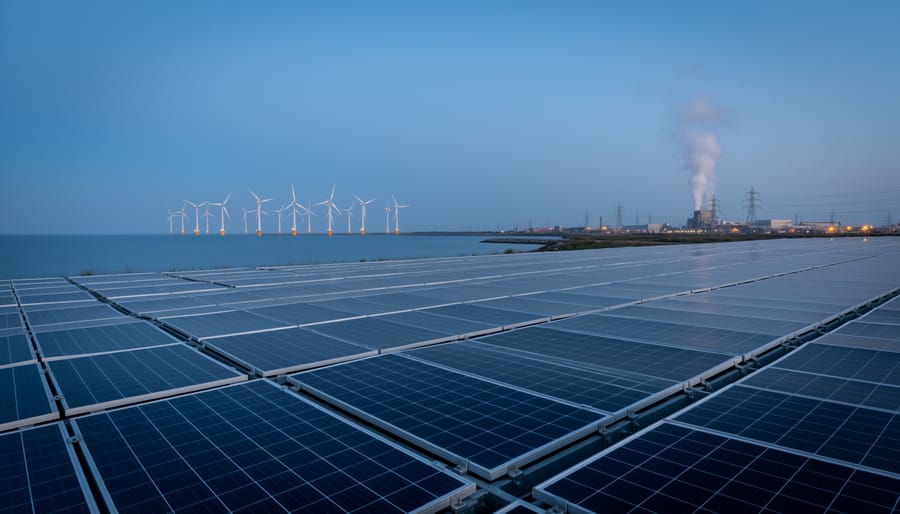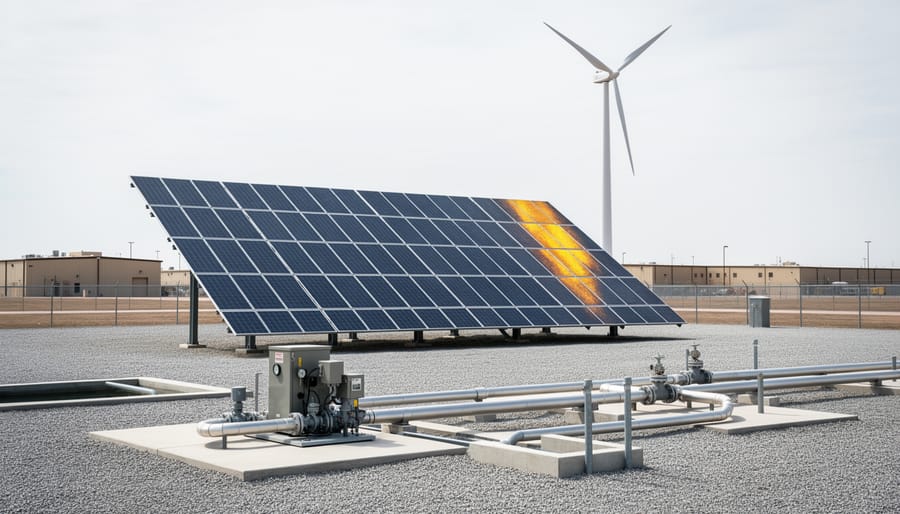
A DoD memorandum of understanding in the renewable energy sector establishes a formal framework through which the Department of Defense partners with public and private entities to advance clean energy infrastructure on military installations and surrounding communities. These agreements define the roles, responsibilities, and resource commitments of each party without creating legally binding obligations, allowing the DoD to accelerate renewable energy deployment while sharing technical expertise and risk with commercial partners.
The Department of Defense operates as the largest single energy consumer in the United States, managing over 300,000 buildings and approximately 2.8 billion square feet of facility space worldwide. This massive energy footprint creates both a strategic vulnerability and a significant opportunity for renewable energy integration. Through memoranda of understanding, the DoD systematically reduces its dependence on traditional grid infrastructure while supporting national energy security objectives and meeting federal sustainability mandates.
For industrial partners in sectors ranging from solar and wind development to energy storage and water treatment systems, DoD MoUs represent access to long-term project pipelines, stable offtake agreements, and collaboration with one of the world’s most sophisticated energy management operations. The water-energy nexus proves particularly relevant, as military installations require both reliable power generation and advanced wastewater treatment solutions to maintain operational readiness in resource-constrained environments.
Understanding the structure, requirements, and strategic value of these partnership frameworks enables organizations to position themselves effectively for DoD renewable energy initiatives while contributing to broader sustainability goals that extend well beyond military applications.
Understanding DoD Memoranda of Understanding in Renewable Energy
A Memorandum of Understanding (MoU) issued by the Department of Defense represents a formal framework that outlines collaboration terms between the DoD and external partners for renewable energy development. Unlike legally binding contracts that enforce specific obligations through potential litigation, an MoU establishes mutual intentions, shared objectives, and working principles without creating enforceable commitments. This distinction matters significantly in the renewable energy sector, where partners need flexibility to adapt to technological advances, regulatory changes, and evolving operational requirements while maintaining commitment to broader sustainability goals.
- Memorandum of Understanding
- A written agreement between parties that defines cooperative intentions and establishes a framework for collaboration without creating legally enforceable obligations.
- Binding vs. Non-Binding Agreements
- Binding agreements create legal obligations enforceable in court, while non-binding agreements like MoUs establish expectations and cooperative frameworks without legal recourse for non-performance.
- Strategic Partnership
- A formal collaborative relationship designed to achieve long-term mutual objectives through shared resources, expertise, and coordinated action toward common goals.
- Renewable Energy Mandate
- Official policy requirements directing government agencies to achieve specific renewable energy targets, typically specifying percentages of total energy consumption or generation capacity by defined deadlines.
The DoD’s application of MoUs to renewable energy initiatives serves multiple strategic purposes. These agreements facilitate exploration of innovative technologies, from solar arrays on military installations to biomass conversion systems, without committing the department to procurement before technology validation. They enable the DoD to leverage private sector expertise and capital while maintaining operational control over critical infrastructure.
The Department’s strategic interest stems from concrete operational needs. Military installations consume enormous amounts of energy, making them vulnerable to grid disruptions and price volatility. Renewable energy sources, particularly when paired with storage systems and microgrid capabilities, provide operational resilience during emergencies. Installations with onsite renewable generation and water recycling systems maintain critical functions even when external utilities fail, a capability increasingly vital as climate-related infrastructure disruptions become more frequent.
Federal sustainability mandates further drive DoD renewable energy partnerships. Executive orders and congressional directives require the military to reduce greenhouse gas emissions, increase renewable energy use, and improve water efficiency. MoUs provide mechanisms to achieve these targets through partnerships that share financial burdens and technical risks while accelerating deployment timelines beyond what the DoD could accomplish independently.
Strategic Framework: Why the DoD Prioritizes Renewable Energy Partnerships
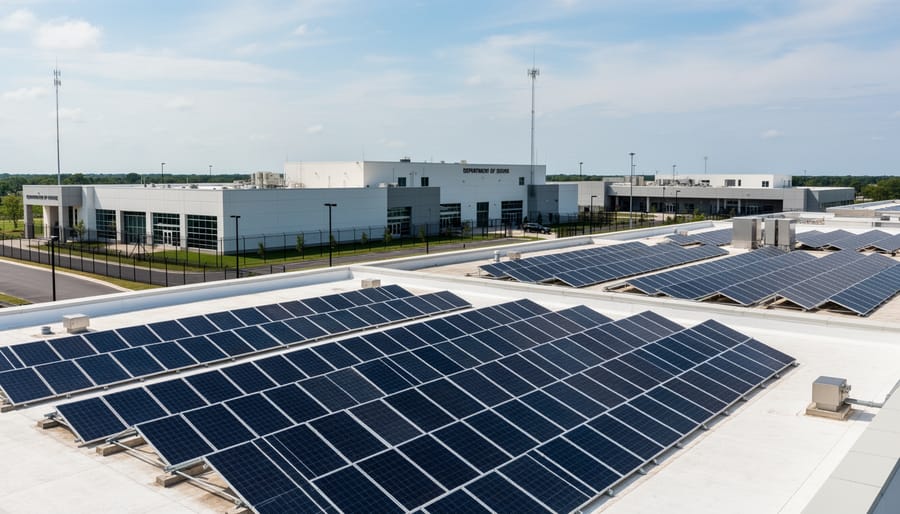
The Department of Defense’s commitment to renewable energy partnerships stems from a convergence of operational imperatives and strategic priorities that extend far beyond environmental compliance. At the core lies energy security, the DoD operates more than 500,000 buildings across 5,000 installations worldwide, consuming approximately 30 terawatt-hours of electricity annually. This massive energy demand creates vulnerability: grid disruptions, price volatility, and supply chain dependencies directly threaten mission readiness. By diversifying energy sources through renewable partnerships, the DoD achieves resiliency through energy security ensuring critical installations can maintain operations during grid failures or emergencies.
Cost reduction represents another powerful driver. The DoD’s annual energy expenditure exceeds $3 billion, making even modest efficiency gains financially significant. Long-term power purchase agreements structured through renewable energy MoUs lock in predictable pricing, insulating the department from fossil fuel market fluctuations. Solar and wind installations on military land eliminate transmission costs while generating revenue through excess capacity sales, creating a self-sustaining economic model that reduces taxpayer burden.
Operational continuity demands that forward operating bases, training facilities, and command centers maintain uninterrupted power. Distributed renewable energy systems, particularly when integrated with microgrids and energy storage, provide redundancy that centralized fossil fuel infrastructure cannot match. This becomes critical in contested environments where fuel supply lines become tactical liabilities.
These motivations align seamlessly with federal mandates, including Executive Orders targeting net-zero emissions by 2050 and requirements for federal agencies to source carbon pollution-free electricity. Climate resilience strategies recognize that extreme weather events and resource scarcity pose direct threats to national security. Renewable energy partnerships allow the DoD to meet compliance requirements while simultaneously strengthening infrastructure against climate-related disruptions. For industrial partners in water treatment and sustainable energy sectors, understanding these motivations reveals where private capabilities intersect with defense priorities, creating partnership opportunities that serve both commercial and national security interests.
Key Components of DoD Renewable Energy MoUs
Scope and Objectives
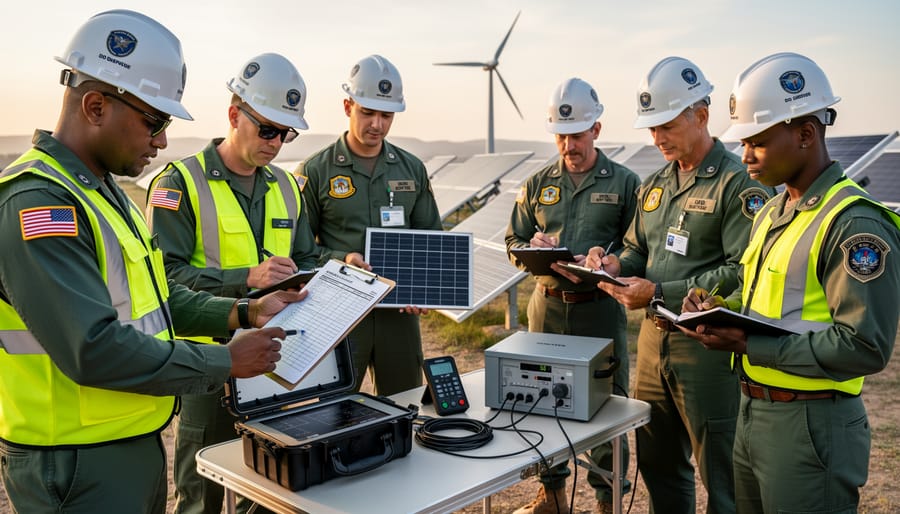
Renewable energy MoUs begin with clearly articulated scope definitions that specify target generation capacity, technology deployment timelines, and integration parameters with existing DoD installations. These agreements typically identify which renewable resources will power specific facilities, solar arrays for base operations, wind turbines for remote installations, biomass systems utilizing organic waste streams, or waste-to-energy facilities converting solid waste into reliable power. The scope section delineates physical boundaries, electrical grid connection points, and compatibility requirements with legacy infrastructure. Objectives extend beyond simple kilowatt-hour targets to encompass resilience metrics such as islanding capability during grid disruptions, reduced dependence on diesel generators, and measurable greenhouse gas reductions. For installations with significant water treatment operations, MoUs often specify how energy solutions will support desalination, wastewater processing, or water recycling systems, creating integrated resource management frameworks that simultaneously address energy security and water sustainability imperatives.
Resource and Risk Allocation
In DoD renewable energy memoranda of understanding, resource and risk allocation follows a shared-responsibility model designed to balance military requirements with commercial viability. The DoD typically provides site access, existing infrastructure connections, and long-term energy purchase commitments that create revenue certainty for private partners. Private sector entities contribute capital investment, technical expertise, and operational management, bringing specialized knowledge in energy production, wastewater treatment integration, or hybrid system design.
Risk distribution reflects each party’s strengths. The military retains operational security oversight and maintains control over critical infrastructure, while private partners assume construction delays, technology performance risks, and market fluctuations in equipment costs. Financial structures often include performance guarantees tied to energy output or efficiency metrics, with penalties and incentives clearly defined.
Technical expertise flows bidirectionally: companies deliver cutting-edge renewable technologies and water-energy integration solutions, while the DoD provides operational data, facility-specific requirements, and security protocols that shape system design. This allocation creates partnerships where neither party bears disproportionate exposure, making projects attractive to institutional investors and established energy firms alike. Clear delineation of responsibilities in the MoU prevents disputes and ensures accountability throughout project lifecycles.
Performance Standards and Compliance
Performance standards in DoD renewable energy MoUs establish rigorous benchmarks that extend beyond simple energy output metrics. Partners must demonstrate compliance with federal environmental regulations, including the National Environmental Policy Act (NEPA) and Clean Water Act provisions when projects involve water resources or treatment facilities. Operational standards typically mandate minimum uptime percentages, energy efficiency thresholds, and integration capabilities with existing military infrastructure.
Water conservation targets have become increasingly prominent in these agreements, particularly for installations in water-stressed regions. Projects that incorporate wastewater treatment or water recycling technologies must meet EPA standards while delivering measurable reductions in freshwater consumption. Regular reporting, often quarterly, documents energy production, water usage, emissions reductions, and any deviations from agreed specifications. Non-compliance triggers defined remediation processes, with persistent failures potentially terminating the partnership. These exacting standards ensure that renewable energy projects genuinely advance both operational resilience and environmental stewardship objectives.
Benefits for Industrial and Private Sector Partners
Entering into renewable energy MoUs with the Department of Defense creates substantial competitive advantages for companies operating in sustainable energy, industrial wastewater treatment, and environmental technology sectors. These partnerships unlock access to one of the world’s largest energy consumers, the DoD operates over 500,000 facilities globally and spends billions annually on energy, providing scale that few commercial clients can match.
Market credibility represents perhaps the most immediate benefit. Companies that successfully partner with the DoD gain a powerful validation signal that resonates across both public and private sectors. This credibility accelerates market entry into adjacent government agencies, state-level renewable initiatives, and risk-averse corporate clients who view DoD collaboration as proof of technical capability and operational reliability. For firms in industrial energy partnerships this government endorsement often becomes the differentiator in competitive bidding processes.
Long-term contract stability distinguishes DoD MoUs from typical commercial agreements. The department’s commitment to energy resilience and decarbonization creates multi-year partnerships that span facility upgrades, operational phases, and maintenance cycles. This predictability enables better financial planning, supports investment in specialized equipment, and reduces the revenue volatility that plagues project-based businesses. Companies can dedicate engineering resources to innovation rather than constant client acquisition.
Pros
- Access to large-scale, multi-year contracts with predictable revenue streams and clear performance metrics.
- Enhanced market credibility that accelerates entry into government and risk-averse commercial sectors.
- Opportunities to validate emerging technologies at scale with a financially stable partner.
- Technical collaboration with DoD engineers and research facilities that can drive innovation.
Cons
- Extensive compliance requirements and security clearances can create administrative burden and delays.
- Longer procurement timelines compared to commercial projects, requiring patient capital.
- Rigorous performance standards with limited flexibility for modifications once agreements are executed.
- Potential restrictions on intellectual property use and commercialization of jointly developed technologies.
Technology validation through DoD deployment carries unique weight. The military’s demanding operational environments, from desert bases to maritime installations, test renewable energy and water treatment systems under conditions that commercial settings rarely encounter. Technologies proven in these contexts gain a competitive advantage when marketed to industrial clients facing harsh environments or critical uptime requirements.
Financial terms often include risk-sharing mechanisms that protect private partners during development phases while ensuring fair compensation for successful performance. The DoD’s commitment to energy cost reduction aligns partner incentives with operational outcomes rather than pure upfront costs, creating win-win structures where efficiency improvements directly benefit both parties.
The Water-Energy Nexus in DoD MoUs
Military installations face a dual challenge: securing reliable energy while managing substantial water demands. DoD renewable energy MoUs increasingly address both imperatives through integrated solutions that treat water treatment and energy generation as complementary objectives rather than separate concerns.
Industrial wastewater facilities present particularly strong opportunities within this framework. Anaerobic digestion systems can process organic waste from base operations to generate biogas for electricity and heat, while simultaneously treating wastewater to meet discharge standards. These closed-loop systems reduce both energy costs and water infrastructure strain, two priorities explicitly outlined in many DoD sustainability agreements.
Water recycling technologies also create synergies with renewable resource options deployed on military sites. Treated greywater and process water can support cooling systems for solar thermal installations or provide makeup water for biomass energy operations. This integration proves especially valuable at installations in water-stressed regions, where conventional energy infrastructure competes with operational water needs.
The DoD’s focus on operational resilience further elevates water-energy integration. MoUs that incorporate advanced membrane bioreactors or constructed wetland systems paired with renewable energy infrastructure demonstrate tangible value: they maintain mission-critical operations during utility disruptions while reducing long-term resource dependencies. For private sector partners, this creates entry points to demonstrate dual-capability solutions that address multiple DoD mandates simultaneously.
Forward-thinking agreements now include performance metrics that measure both energy output and water conservation outcomes. Companies offering integrated expertise, wastewater treatment engineering combined with renewable energy deployment, position themselves competitively for partnerships that recognize these interconnected challenges. The business case strengthens when proposals quantify reductions in both energy consumption and water withdrawal, aligning commercial capabilities with the DoD’s comprehensive sustainability objectives.
Real-World Applications and Case Examples
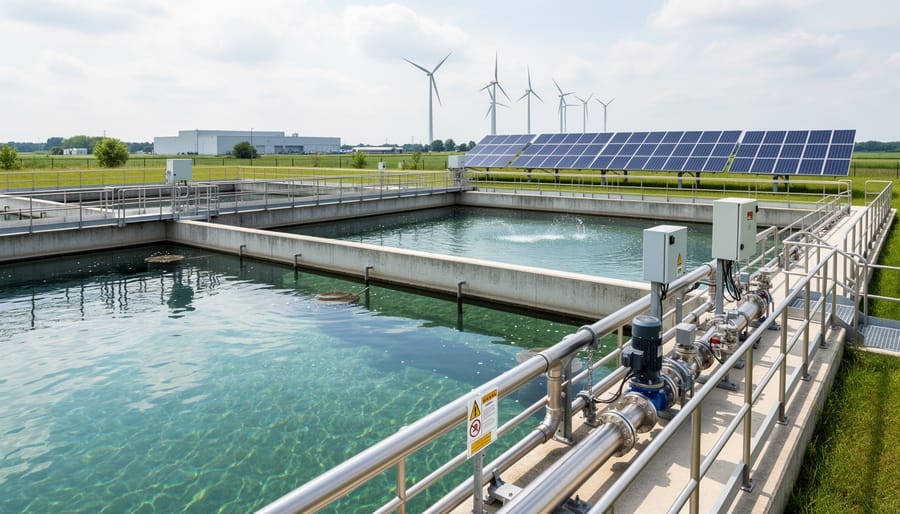
DoD renewable energy MoUs have produced measurable results across multiple military installations, demonstrating their practical value for both defense operations and commercial partners. These examples illustrate how structured partnerships translate policy frameworks into operational renewable infrastructure.
At several Air Force bases, solar photovoltaic installations developed through MoUs now generate significant portions of base electricity needs. These projects typically involve private developers financing, constructing, and maintaining the systems while the DoD commits to long-term power purchase agreements. The arrangements reduce installation energy costs by 15-30 percent while eliminating upfront capital requirements. Private partners benefit from guaranteed revenue streams and proven project performance that strengthens their market position for subsequent commercial developments.
Navy installations have successfully implemented waste-to-energy systems through MoUs that address both renewable generation and waste management challenges. One notable partnership converted organic waste from food services and grounds maintenance into biogas for on-site electricity generation and heating. The integrated approach reduced waste disposal costs, generated renewable energy, and demonstrated closed-loop resource management principles. The technology provider gained validation for scaling similar systems to industrial food processing and manufacturing facilities.
Water treatment integration represents a particularly promising application area. Several Army installations have established MoUs combining solar energy generation with advanced wastewater treatment and water recycling systems. These projects recognize that water purification requires substantial energy input while renewable installations require water for cooling and cleaning. By integrating both systems, partners achieve greater overall efficiency and resource conservation. These installations serve as working models for industrial facilities seeking to optimize their water-energy balance, reflecting broader energy partnership trends toward integrated resource management.
Geothermal projects at western installations demonstrate how MoUs enable exploration of location-specific renewable resources. Private partners conduct geological assessments and infrastructure development with the DoD providing site access and guaranteed demand. These arrangements reduce private sector risk while enabling the military to access renewable baseload power unavailable through solar or wind alone.
The common thread across successful MoUs is clear scope definition, realistic performance metrics, and aligned incentives. Projects that specify technical requirements, establish measurable outcomes, and distribute risks appropriately consistently outperform those with vague commitments or misaligned expectations between partners.
Navigating the MoU Development Process
Initiating a memorandum of understanding with the Department of Defense requires methodical preparation and clear demonstration of technical credibility. Companies in the renewable energy and wastewater treatment sectors must approach this process with realistic timelines, typically spanning several months from initial contact to finalized agreement, and thorough documentation of their capabilities.
The development process follows a structured pathway that demands both strategic positioning and operational readiness:
- Identify DoD energy needs and solicitations through official channels including the Defense Logistics Agency, individual installation energy offices, and federal procurement databases such as . Monitor requests for information (RFIs) and broad agency announcements specific to renewable energy and resource conservation.
- Assess technical and financial capabilities against DoD requirements, ensuring your organization can meet security clearance protocols, performance bonding, and insurance thresholds. Document past project scale, technology certifications, and relevant experience with similar infrastructure complexity.
- Engage with installation energy managers directly to understand site-specific challenges, existing infrastructure constraints, and operational priorities. These conversations reveal practical considerations that formal solicitations may not fully capture, particularly regarding water-energy integration opportunities.
- Develop a proposal framework that addresses technical specifications, implementation timelines, cost structures, and measurable performance outcomes. Include detailed plans for compliance with federal environmental standards and any required cybersecurity protocols for grid-connected systems.
- Negotiate terms and compliance standards with particular attention to intellectual property rights, data sharing requirements, performance guarantees, and dispute resolution mechanisms. Clarify how environmental monitoring, including water quality metrics for integrated systems, will be reported and verified.
Technical capability demonstration proves essential throughout this process. Companies must provide verifiable evidence of successful project delivery, particularly for technologies that combine renewable energy generation with water treatment or resource recovery. Financial stability documentation, including audited statements and bonding capacity, establishes credibility for long-term partnerships. Legal review by counsel experienced in federal contracts prevents costly missteps regarding indemnification clauses, termination provisions, and compliance obligations that extend beyond the MoU’s active period.
Future Outlook: MoUs and the Global Renewable Energy Transition
DoD memoranda of understanding are evolving beyond domestic installations to shape international renewable energy partnerships. Several NATO allies and partner nations are exploring similar frameworks, recognizing that military energy resilience strengthens collective security. Australia, the United Kingdom, and Middle Eastern nations with significant US defense cooperation are developing MoU templates that mirror DoD approaches, creating standardized pathways for private sector engagement across multiple jurisdictions. This internationalization offers companies proven experience in one region leverage to expand globally.
Advanced technology integration represents the next frontier. While solar and wind dominate current agreements, DoD partnerships are increasingly incorporating hydrogen production facilities, particularly green hydrogen generated from excess renewable capacity. Advanced biofuels derived from organic waste streams, including treated wastewater biosolids, are gaining attention as transportation fuel alternatives. Energy storage systems, from grid-scale batteries to thermal storage, are becoming standard MoU components, addressing the intermittency challenge that has limited renewable adoption. These technologies align with industrial needs beyond military installations, creating market pull for innovations that benefit commercial sectors.
The ripple effect extends to municipal and industrial procurement strategies. As DoD MoUs demonstrate viable frameworks for complex public-private renewable partnerships, cities and corporations are adapting similar models. Water utilities exploring energy-from-waste projects, manufacturing facilities seeking microgrid independence, and industrial parks developing shared renewable infrastructure increasingly reference DoD agreement structures. The emphasis on measurable performance standards, risk-sharing mechanisms, and long-term commitment timelines provides templates that reduce negotiation friction and accelerate deployment. By 2026, the DoD’s renewable partnership model has effectively de-risked similar arrangements across sectors, with industrial wastewater treatment facilities particularly well-positioned to leverage the water-energy nexus approach pioneered through these agreements. Companies positioned at this intersection can expect expanding opportunities as these frameworks normalize advanced renewables in 2026 and beyond.

DoD renewable energy memoranda of understanding represent far more than administrative agreements, they are strategic frameworks that align national security objectives with commercial innovation in sustainable energy and resource management. These partnerships create pathways for private sector companies to contribute meaningfully to defense infrastructure resilience while establishing themselves as trusted partners in critical national programs.
For companies specializing in water treatment and sustainable energy, these MoUs offer distinctive advantages. The defense sector’s emphasis on operational continuity, water conservation, and energy independence creates demand for integrated solutions that address multiple resource challenges simultaneously. Organizations that can demonstrate technical capability in wastewater treatment, renewable energy integration, or closed-loop systems find themselves well-positioned to participate in projects that deliver both immediate operational benefits and long-term strategic value.
The growing sophistication of DoD renewable energy initiatives reflects broader recognition that energy security and environmental stewardship are inseparable from operational effectiveness. As military installations seek to enhance resilience against grid disruptions and water scarcity, the commercial expertise developed in industrial settings becomes increasingly relevant to defense applications.
Companies operating in environmental technology, energy efficiency, and resource recovery should evaluate their capabilities against DoD partnership opportunities. The structured approach of memoranda of understanding provides a practical entry point for collaboration that balances innovation with the accountability standards required in government partnerships. Exploring these frameworks today positions organizations to contribute to the infrastructure that will define sustainable defense operations for decades ahead.