
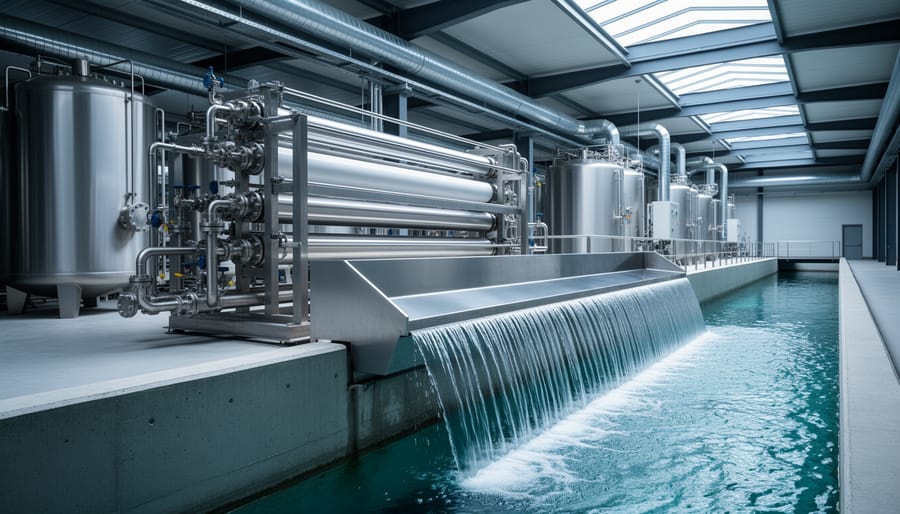
Industrial wastewater treatment has become a regulatory requirement and business imperative across virtually every manufacturing sector. Facilities that process chemicals, manufacture pharmaceuticals, produce food and beverages, or finish metals generate effluent streams that can contain heavy metals, organic compounds, suspended solids, and other contaminants at concentrations far exceeding municipal limits. Without proper treatment, these discharges threaten receiving water bodies, violate environmental permits, and expose companies to penalties that can reach millions of dollars annually.
The engineering challenge lies in matching treatment technology to your specific waste stream characteristics. A textile operation dealing with high-color wastewater containing dyes requires fundamentally different approaches than a semiconductor facility managing fluoride-laden rinse water. Biological treatment works well for degradable organic loads. Physical-chemical processes handle dissolved metals and non-biodegradable substances. Membrane systems provide advanced separation where water reuse drives the investment case.
Modern treatment systems serve dual purposes. They ensure compliance while recovering valuable resources. Companies now extract metals from plating wastewater for resale, reclaim process water to reduce freshwater intake by 40-60%, and generate biogas from high-strength organic streams to offset energy costs. This shift from pure compliance spending to value-generating infrastructure has transformed how financial stakeholders evaluate wastewater projects.
The selection process demands rigorous analysis of your effluent composition, discharge limits, space constraints, and total cost of ownership over 15-20 years. Pilot testing proves essential before committing capital to full-scale systems. Treatment technologies that excel in one application often fail in others due to subtle differences in water chemistry or operational patterns. Understanding these variables determines whether your facility achieves reliable compliance or faces recurring operational problems and regulatory exposure.
The True Cost of Untreated Industrial Wastewater
The financial consequences of inadequate wastewater treatment extend far beyond the immediate disposal costs. Regulatory penalties alone can reach millions of dollars per violation, with environmental protection agencies worldwide increasing both scrutiny and enforcement. In the United States, Clean Water Act violations have resulted in individual fines exceeding $10 million, while European Union member states enforce the Water Framework Directive with escalating penalty structures. These aren’t isolated incidents. Recent enforcement trends show a 40% increase in industrial wastewater violations prosecuted over the past five years.
Operational shutdowns present an even more severe impact. When facilities fail to meet discharge standards, regulators can mandate immediate cessation of operations until compliance is achieved. A chemical manufacturer in Southeast Asia experienced a three-month shutdown due to excessive heavy metal discharge, resulting in $23 million in lost revenue and permanent loss of two major contracts. The cascade effect is significant: production stops, supply chains break, customers seek alternative suppliers, and market share evaporates.
Environmental damage carries both immediate remediation costs and long-term liability exposure. Groundwater contamination from untreated industrial effluent can take decades to remediate, with cleanup costs routinely exceeding tens of millions of dollars. A textile facility in South Asia faced $15 million in remediation expenses after contaminated discharge affected local water supplies. The company also bore responsibility for providing clean water to affected communities during the restoration period.
Reputational damage in today’s connected marketplace can prove more costly than regulatory fines. Sustainability reporting requirements now extend throughout supply chains, and major corporations increasingly audit their suppliers’ environmental practices. Failing these audits means exclusion from lucrative contracts. A study by the Manufacturing Institute found that 67% of purchasing managers would drop suppliers with poor environmental records, regardless of price advantages.
The business case for proactive treatment becomes clear when comparing these costs against modern treatment system investments. Advanced treatment technologies typically achieve return on investment within three to five years through avoided penalties, maintained operations, water reuse opportunities, and preserved business relationships. Facilities that view wastewater treatment as strategic infrastructure rather than regulatory burden consistently outperform competitors in both financial metrics and market positioning. The question isn’t whether to invest in proper treatment, but rather how quickly you can implement it before facing consequences that no remediation budget can fully address.
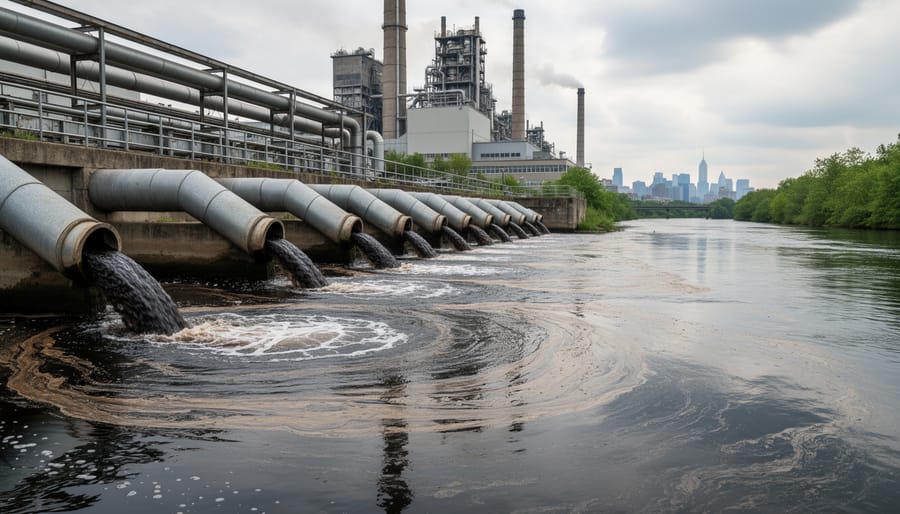
Understanding Your Industrial Wastewater Profile
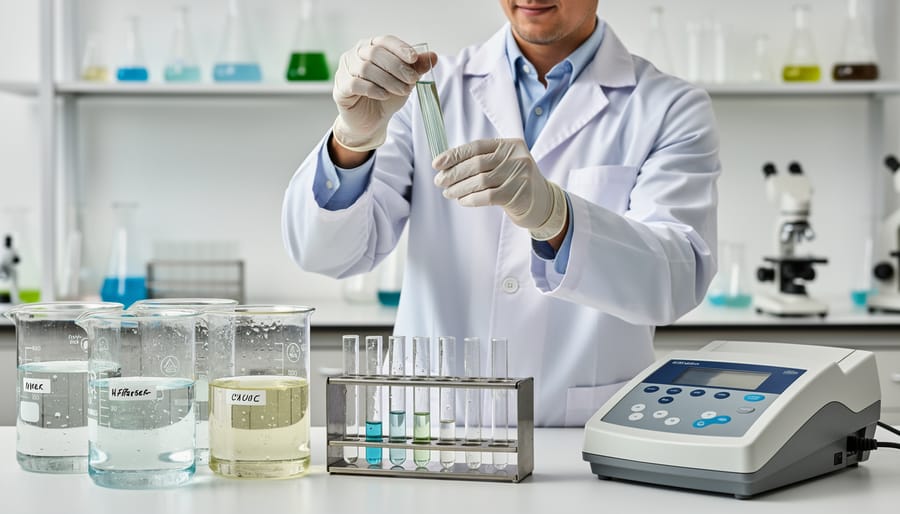
Characterization and Testing Requirements
Comprehensive characterization of industrial wastewater begins with measuring water quality parameters that define treatment requirements and regulatory compliance. The scope of testing varies significantly across industries, but several fundamental parameters remain universal.
Biochemical Oxygen Demand (BOD) and Chemical Oxygen Demand (COD) measure organic pollution levels, with BOD indicating biodegradable organic matter and COD capturing total organic content. These metrics directly influence biological treatment system design and operational costs. Food processing facilities typically generate high BOD levels (1,000 to 5,000 mg/L), while textile operations may show elevated COD readings due to synthetic compounds.
Total Suspended Solids (TSS) quantifies particulate matter that affects filtration requirements and discharge limits. pH monitoring proves critical across all sectors, as extreme values damage treatment infrastructure and inhibit biological processes. Most treatment systems operate optimally within the 6.5 to 8.5 pH range.
Heavy metals testing addresses industry-specific concerns. Electronics manufacturers must monitor copper, nickel, and chromium concentrations, while automotive plants focus on zinc and lead. Pharmaceutical operations require specialized organic compound analysis, including active pharmaceutical ingredients that conventional tests might miss.
Nitrogen and phosphorus measurements guide nutrient removal strategies, particularly for industries with biological treatment systems. Oil and grease content determines the need for pre-treatment equipment, especially in food service and manufacturing operations.
Regular testing frequency ranges from daily monitoring for critical parameters to quarterly sampling for trace contaminants. This data-driven approach enables optimization of treatment processes, ensures regulatory compliance, and identifies cost-saving opportunities through process improvements.
Regulatory Discharge Standards
Industrial wastewater discharge standards represent a complex web of regulations that vary significantly across jurisdictions, yet share common objectives: protecting water resources, safeguarding public health, and preserving aquatic ecosystems. These standards directly influence every aspect of treatment system design, from technology selection to operational protocols.
At the international level, the World Health Organization provides guidelines that many countries adapt to local conditions. The European Union’s Industrial Emissions Directive establishes stringent baseline requirements across member states, including sector-specific discharge limits for industries like chemicals, textiles, and food processing. Meanwhile, the United States Environmental Protection Agency enforces categorical pretreatment standards that apply nationally, with additional state-level requirements often exceeding federal minimums.
Regional variations reflect local environmental priorities and water scarcity concerns. Singapore maintains exceptionally strict standards due to limited freshwater resources. China’s revised discharge standards, implemented progressively since 2018, now rival European benchmarks in key industrial zones. India’s Central Pollution Control Board sets tiered limits based on receiving water body classifications.
These regulations typically specify maximum concentrations for conventional pollutants like biochemical oxygen demand, total suspended solids, and pH levels. They also address priority pollutants including heavy metals, organic compounds, and increasingly, emerging contaminants such as per- and polyfluoroalkyl substances.
The practical impact is straightforward: stricter limits require more advanced treatment technologies. A facility facing a 10 mg/L total nitrogen limit will need biological nutrient removal systems, while a 50 mg/L limit might allow simpler approaches. Understanding applicable discharge standards during the planning phase prevents costly retrofits and ensures compliance from day one.
Many jurisdictions now offer incentives for industries that achieve better-than-required discharge quality, recognizing that forward-thinking treatment investments benefit both business continuity and environmental stewardship.
Core Industrial Wastewater Treatment Technologies
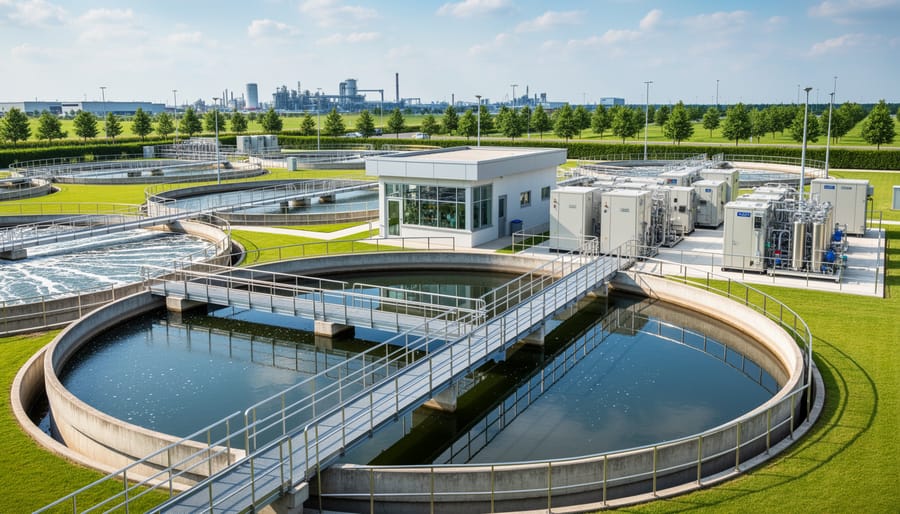
Physical Treatment Processes
Physical treatment processes form the essential first line of defense in industrial wastewater management, removing suspended solids and larger contaminants before water moves to subsequent treatment stages. These mechanical methods reduce treatment costs downstream while protecting sensitive biological or chemical processes from interference.
Screening represents the initial barrier, capturing large debris, fibers, and floating materials through coarse or fine screens. Manufacturing facilities processing textiles, food products, or pulp and paper generate substantial fibrous content that can damage pumps and clog pipes. Modern automated bar screens with self-cleaning mechanisms operate continuously in high-volume applications, minimizing manual intervention and maintenance requirements.
Sedimentation tanks allow gravity to separate settleable solids from the water column. Primary clarifiers achieve removal rates of 50-70% for suspended solids in typical industrial applications. The process proves particularly effective for heavy particles in metal finishing, mining operations, and petrochemical facilities. Inclined plate settlers can reduce footprint requirements by 50% compared to conventional circular clarifiers while maintaining equivalent performance.
Flotation systems excel where sedimentation falls short, particularly for oil-water separation and low-density particles. Dissolved air flotation introduces microscopic air bubbles that attach to suspended solids, floating them to the surface for removal. This technology achieves oil and grease removal exceeding 95% in refinery and food processing applications.
Filtration provides final polishing, removing particles down to 5 microns or smaller depending on media selection. Sand filters, multimedia filters, and membrane systems address different particle size ranges and treatment objectives. Selection depends on required effluent quality, flow rates, and downstream reuse requirements.
Chemical Treatment Solutions
Chemical treatment solutions address dissolved contaminants that physical processes cannot capture. These methods alter the chemical composition of wastewater, transforming pollutants into solid particles for removal or adjusting water properties to meet discharge standards.
Coagulation and flocculation work as a two-step process. Coagulants like aluminum sulfate or ferric chloride destabilize suspended particles, neutralizing their electrical charges. Flocculation follows, using gentle mixing to form larger aggregates called flocs that settle readily. This combination proves particularly effective for removing phosphorus, heavy metals, and colloidal materials in manufacturing facilities. A textile plant in Southeast Asia reduced suspended solids by 85% after implementing this approach, cutting downstream filtration costs significantly.
Neutralization controls pH levels critical for both treatment effectiveness and regulatory compliance. Acids or alkalis adjust wastewater that’s too acidic or alkaline, protecting equipment and biological treatment systems. Metal finishing operations commonly use lime or caustic soda to raise pH, precipitating dissolved metals before discharge.
Chemical precipitation converts dissolved substances into insoluble solids. Adding specific reagents creates targeted reactions. For example, lime precipitation removes heavy metals like copper and zinc in concentrations below 1 mg/L. Phosphorus precipitation using iron or aluminum salts achieves removal rates exceeding 90%.
The choice between these methods depends on contaminant types, required removal efficiency, and operating budgets. Many facilities combine multiple chemical treatments for optimal results. Initial chemical costs typically represent 15-30% of treatment operating expenses, but the investment protects receiving waters while ensuring regulatory compliance across global markets.
Biological Treatment Systems
Biological treatment systems harness microorganisms to break down organic pollutants in industrial wastewater, offering an environmentally sound and cost-effective solution for facilities across manufacturing, food processing, and pharmaceutical sectors. These systems operate through either aerobic or anaerobic processes, each suited to different waste characteristics and treatment objectives.
Aerobic systems require oxygen to function. The activated sludge process remains the most widely adopted method, where microorganisms form flocs that consume organic matter while suspended in aeration tanks. This approach effectively reduces biochemical oxygen demand (BOD) by 85-95% in typical industrial applications. Membrane bioreactors (MBR) advance this concept by integrating ultrafiltration membranes directly into the treatment process, producing high-quality effluent suitable for reuse or discharge to sensitive waterways. A textile manufacturer in Bangladesh, for example, reduced water consumption by 60% after implementing MBR technology to recycle process water.
Moving bed biofilm reactors (MBBR) present another aerobic option, utilizing plastic carriers that provide surface area for biofilm growth. This design delivers treatment efficiency in a compact footprint, making it particularly valuable for facilities with space constraints.
Anaerobic systems operate without oxygen and generate biogas as a valuable byproduct. Breweries and food processors increasingly adopt anaerobic digestion to treat high-strength organic waste while capturing methane for energy recovery. This dual benefit reduces both treatment costs and carbon footprint, aligning with global sustainability mandates while improving operational economics.
Advanced Treatment Methods
Advanced treatment technologies enable industries to achieve stringent discharge standards and transform wastewater into a reusable resource. Membrane filtration, including microfiltration and ultrafiltration, removes suspended solids, bacteria, and macromolecules through physical screening barriers. Reverse osmosis systems apply pressure to force water through semipermeable membranes, eliminating dissolved salts and contaminants to produce high-purity effluent suitable for process reintegration or safe discharge.
Advanced oxidation processes utilize powerful oxidants like ozone, hydrogen peroxide, or UV light to break down recalcitrant organic compounds and micropollutants that conventional methods cannot address. Ion exchange technology selectively removes specific ions from wastewater, proving particularly effective for treating metal-contaminated streams in electronics manufacturing and mining operations.
These methods often work synergistically. A pharmaceutical facility might combine membrane filtration with advanced oxidation to remove active pharmaceutical ingredients, while a power plant could integrate reverse osmosis with ion exchange for boiler feedwater preparation. The investment typically delivers substantial returns through reduced water procurement costs, lower discharge fees, and enhanced regulatory compliance.
Building a Treatment System That Actually Works for Your Operation
Modular vs. Custom-Engineered Systems
Selecting between modular and custom-engineered wastewater treatment systems represents a critical decision that directly impacts capital expenditure, operational flexibility, and long-term performance. Each approach offers distinct advantages depending on your facility’s specific requirements.
Modular systems provide pre-engineered, containerized units designed for standard treatment applications. These systems excel in speed of deployment, typically achieving operational status within weeks rather than months. A food processing facility in Southeast Asia, for example, implemented a modular membrane bioreactor system that began treating 500 cubic meters daily just six weeks after delivery. The primary advantages include predictable costs, factory testing before shipment, and easier scalability through adding parallel units. They work particularly well for operations with consistent wastewater characteristics and flow rates between 50 and 2,000 cubic meters per day.
Custom-engineered solutions become necessary when dealing with complex contaminant profiles, extreme flow variations, or stringent discharge requirements. A petrochemical plant processing multiple waste streams with varying pH levels and organic loads required integrated equalization, advanced oxidation, and biological treatment stages that no standard package could address. While initial investment runs 30 to 50 percent higher than comparable modular systems, custom designs optimize treatment efficiency for specific conditions and often reduce operational costs by 20 to 30 percent over the system’s lifetime.
The decision hinges on several factors: wastewater complexity, available space, budget constraints, timeline urgency, and future expansion plans. Facilities with straightforward treatment needs and limited capital benefit from modular approaches, while operations facing regulatory challenges or unusual contamination profiles justify custom engineering investments.
Space, Energy, and Infrastructure Considerations
Industrial wastewater treatment systems demand careful evaluation of physical and operational constraints before implementation. Space availability frequently determines technology selection, particularly for facilities operating within existing infrastructure. Membrane bioreactors typically require 30-50% less footprint than conventional activated sludge systems, making them attractive for space-constrained operations. Chemical precipitation tanks and clarifiers, conversely, may need substantial surface area that smaller manufacturing sites cannot accommodate.
Power consumption represents a significant operational expense. Aeration alone can account for 50-70% of total energy costs in biological treatment systems. High-rate anaerobic digesters offer dual benefits: reduced energy demand and biogas generation for offsetting facility power needs. A food processing plant in Southeast Asia reduced annual electricity costs by 40% after implementing anaerobic treatment with combined heat and power generation.
Operator expertise varies considerably across industries and regions. Automated systems with remote monitoring capabilities allow facilities with limited on-site technical staff to maintain compliance. However, advanced oxidation processes and complex membrane systems require trained personnel for optimization and troubleshooting. Evaluate whether local workforce skills match proposed technology demands or whether additional training investments will be necessary.
Integration with existing infrastructure poses practical challenges. Retrofitting treatment systems into operational facilities requires phased implementation to avoid production disruptions. Pre-treatment units often provide the most cost-effective starting point, protecting downstream processes while allowing gradual capacity expansion. Modular systems offer flexibility for phased deployment, aligning capital expenditure with operational requirements and minimizing initial financial commitment.
Scalability and Future-Proofing
Industrial wastewater treatment systems must accommodate growth and evolving requirements over their operational lifespan. Modular designs provide flexibility, allowing facilities to expand capacity by adding treatment units rather than replacing entire systems. This approach proves particularly cost-effective for manufacturers anticipating production increases or facility expansions.
Selecting technologies with adjustable operating parameters ensures systems can respond to changing discharge limits. For example, membrane bioreactors offer scalable performance through simple adjustments in retention time and membrane configuration. Similarly, advanced oxidation processes can be intensified to meet stricter pollutant removal standards without major capital investment.
Building water recycling infrastructure from the outset, even if not immediately utilized, positions companies to capitalize on future water scarcity or pricing pressures. Pre-installing piping networks and treatment connections reduces retrofit costs significantly. Many facilities globally have achieved 30-50% reductions in freshwater consumption by implementing closed-loop systems as regulatory or economic conditions shifted.
Planning for automation upgrades and monitoring system integration protects against technological obsolescence. Treatment systems designed with standardized control interfaces can incorporate emerging sensor technologies and data analytics platforms as they become available, maintaining competitive efficiency without wholesale replacement.
Water Recycling: Turning Compliance into Competitive Advantage
Industrial water recycling has evolved from an environmental obligation to a strategic business opportunity. Companies that implement advanced water recycling solutions are discovering that treating and reusing wastewater delivers measurable financial returns while strengthening their market position in increasingly water-constrained environments.
The economics are compelling. Manufacturing facilities that recycle treated wastewater can reduce freshwater intake by 30 to 90 percent, depending on process requirements and treatment sophistication. A textile dyeing operation in India, for example, cut municipal water purchases by 75 percent after installing membrane bioreactor technology combined with reverse osmosis polishing. The system paid for itself within 22 months through reduced water acquisition costs and lower discharge fees.
Water-stressed regions are accelerating this transition. In Southeast Asia, the Middle East, and parts of North America, freshwater scarcity has transformed recycling from optional to essential. Industrial facilities face allocation limits, rising tariffs, and intensifying competition with agricultural and municipal users. Companies that establish internal recycling capacity insulate themselves from supply disruptions and price volatility while securing operational continuity.
Advanced treatment technologies make high-quality reuse economically viable. Multi-stage systems combining biological treatment, ultrafiltration, and advanced oxidation can produce water suitable for cooling towers, boiler feed, and even process applications previously reserved for potable sources. An automotive manufacturer in Spain now recycles 85 percent of its process water, meeting stringent quality standards for paint shop operations while reducing annual water costs by USD 1.2 million.
The competitive advantages extend beyond cost savings. Major brands increasingly require suppliers to demonstrate water stewardship, particularly in water-scarce regions. Companies with documented recycling programs gain preferred supplier status and access to markets where water risk is a procurement consideration. Sustainability ratings from organizations like CDP Water Security directly influence investor decisions and customer contracts.
Regulatory trends further reinforce the business case. Jurisdictions worldwide are implementing stricter discharge limits while offering incentives for water reuse infrastructure. Tax credits, accelerated depreciation, and reduced permitting timelines reward early adopters. Companies investing now benefit from these programs while building expertise that competitors will later struggle to match.
The transition requires upfront capital and operational changes, but the trajectory is clear. As freshwater becomes scarcer and more expensive, recycling capacity transforms from a compliance checkbox into a fundamental competitive requirement. Forward-looking facilities are treating water as a circular resource, positioning themselves for long-term operational resilience and market advantage.
Real-World Implementation: What Success Looks Like
Successful wastewater treatment implementation varies significantly across industrial sectors, but documented case studies reveal common patterns and measurable outcomes. A pharmaceutical manufacturing facility in Germany invested €2.3 million in an advanced oxidation process combined with biological treatment, reducing chemical oxygen demand by 94% while cutting annual discharge fees by €680,000. The system paid for itself within four years, well ahead of projections.
In the food and beverage sector, a dairy processing plant in New Zealand faced strict regulatory limits on nitrogen and phosphorus discharge. The facility implemented a sequencing batch reactor system with nutrient removal capabilities, achieving effluent quality that exceeded compliance standards by 40%. Beyond regulatory benefits, the plant recovered biogas from the treatment process, offsetting 15% of their energy costs and adding an unexpected revenue stream through renewable energy certificates.
Metal finishing operations present particularly challenging wastewater profiles due to heavy metal contamination. A Malaysian automotive parts manufacturer adopted a three-stage treatment approach incorporating chemical precipitation, membrane filtration, and ion exchange. The system reduced chromium levels from 45 mg/L to below 0.1 mg/L, enabling water reuse for cooling towers and reducing municipal water consumption by 60%. Total implementation cost reached $850,000, with annual savings of $230,000 from reduced water purchase and disposal fees.
Textile manufacturing in Bangladesh demonstrates how treatment systems can transform operational constraints into competitive advantages. One facility treating 1,200 cubic meters daily invested in color removal technology and biological treatment optimized for high organic loads. Compliance with international buyer requirements opened access to premium European markets, increasing contract values by 35%. The treatment system became a marketing asset rather than simply an operational expense.
Performance monitoring across these implementations reveals that operator training and maintenance protocols significantly impact long-term outcomes. Facilities that invest in comprehensive training programs and establish preventive maintenance schedules maintain treatment efficiency above 90%, while those with minimal operator support see performance degradation within 18-24 months. Return on investment calculations must therefore include ongoing operational support, not just capital expenditure.
Optimizing Your Treatment System Performance
Maximizing treatment system performance requires a systematic approach that combines vigilant monitoring, strategic maintenance, skilled personnel, and increasingly, smart technology integration. Industrial facilities that prioritize optimization typically achieve 15-30% reductions in operating costs while improving discharge compliance and extending equipment life.
Regular monitoring forms the foundation of any optimization program. Establish key performance indicators (KPIs) that track both treatment effectiveness and operational efficiency. Critical metrics include effluent quality parameters, energy consumption per unit of water treated, chemical dosing rates, sludge production volumes, and equipment runtime hours. Daily monitoring reveals trends before they become problems. For example, gradual increases in chemical consumption often signal membrane fouling or biological process imbalances that require attention.
Implementing comprehensive preventive maintenance strategies prevents unexpected downtime and costly emergency repairs. Schedule regular inspections of pumps, blowers, clarifiers, and filtration systems according to manufacturer recommendations and operational experience. A food processing facility in Southeast Asia reduced unplanned maintenance costs by 40% after transitioning from reactive to preventive maintenance protocols, which included quarterly equipment audits and proactive component replacement.
Operator training directly impacts system performance. Well-trained operators recognize process anomalies early, adjust parameters appropriately, and respond effectively during upsets. Invest in both initial training and ongoing education covering process fundamentals, troubleshooting techniques, and new technology updates. Cross-training staff ensures operational continuity and builds institutional knowledge.
Process optimization goes beyond routine operations. Conduct periodic audits to identify improvement opportunities. Consider aeration efficiency testing in biological systems, membrane cleaning protocol evaluations, or chemical dosing optimization studies. A textile manufacturer reduced energy costs by 22% after optimizing aeration patterns based on real-time dissolved oxygen monitoring rather than fixed timer schedules.
Digital technologies are transforming treatment system management. Supervisory control and data acquisition (SCADA) systems provide centralized monitoring and control. Advanced analytics and artificial intelligence can predict maintenance needs, optimize chemical dosing, and detect process deviations automatically. Cloud-based platforms enable remote monitoring and benchmarking across multiple facilities, particularly valuable for multinational operations managing diverse treatment sites.
Start optimization initiatives with quick wins that demonstrate value, then expand to more complex improvements. This approach builds momentum and justifies further investment in performance enhancement technologies.
The industrial landscape has fundamentally changed. What once represented a regulatory checkbox now stands as a cornerstone of competitive advantage. Companies that continue to view wastewater treatment solely through the lens of compliance are missing the strategic opportunity in front of them.
Modern treatment systems deliver measurable returns that extend far beyond avoided fines. Facilities across manufacturing, food processing, pharmaceuticals, and chemical production are documenting significant reductions in water acquisition costs, energy consumption, and waste disposal expenses. A textile manufacturer in Southeast Asia recovered 40% of its water usage through advanced treatment and reuse, cutting municipal water costs by millions annually. A petrochemical complex in the Middle East converted treatment byproducts into saleable materials, transforming a cost center into a minor revenue stream.
The regulatory trajectory is clear. Environmental standards will continue tightening globally, and early adopters consistently benefit from lower implementation costs compared to those forced to retrofit under deadline pressure. Industries preparing now gain time to optimize systems, integrate technologies gradually, and avoid the premium pricing that accompanies emergency installations.
Professional assessment remains the critical first step. Every facility operates with unique waste characteristics, discharge requirements, and operational constraints. Generic solutions rarely deliver optimal performance or return on investment. Engaging qualified environmental engineers to evaluate your specific treatment needs provides the foundation for informed decision-making about technology selection, capacity planning, and phased implementation strategies.
The question facing industrial decision-makers isn’t whether to invest in wastewater treatment infrastructure. It’s whether to approach this investment strategically or reactively. Companies choosing the former are already realizing the operational efficiencies, cost savings, and market positioning that effective treatment systems provide. Your facility’s assessment shouldn’t wait for the next permit renewal or regulatory notice.


